


Chakras & Self-Reiki: A Gentle Map for Inner Balance
Chakras offer a meaningful map for bringing greater awareness to your inner life. In many spiritual traditions, they are understood as subtle energy centres through which life-force energy moves and expresses itself. Each chakra is associated with particular qualities of embodiment, feeling, expression, relationship, insight, and spiritual connection.
Reiki can be offered to any area of the body without needing to analyse, diagnose, or precisely identify what is happening there. Yet a chakra-focused practice can give your self-Reiki session a gentle structure. By placing your hands over the corresponding areas of the body, you invite Reiki to enhance the flow and balance of energy through each chakra and to support the aspects of life associated with it.
You do not need to force an outcome. You do not need to see colours, feel heat, or receive a message. Simply place your hands, become present, and allow Reiki to flow for your highest good.
The Seven Main Chakras
The seven main chakras are commonly described as extending from the base of the spine to the crown of the head. They are often pictured as a vertical pathway, connecting our grounded human experience with our awareness of the greater whole.
| Chakra | Location | Traditional qualities |
|---|---|---|
| Root Chakra | Base of the spine; pelvic floor | Grounding, safety, stability, belonging |
| Sacral Chakra | Lower abdomen, below the navel | Feeling, creativity, pleasure, emotional flow |
| Solar Plexus Chakra | Upper abdomen | Confidence, will, personal power, direction |
| Heart Chakra | Centre of the chest | Love, compassion, connection, forgiveness |
| Throat Chakra | Throat and neck | Expression, truth, communication |
| Third Eye Chakra | Forehead, between the eyebrows | Intuition, perspective, inner wisdom |
| Crown Chakra | Top of the head | Spiritual connection, unity, openness |
These associations are guides rather than rigid rules. A chakra is not a test you must pass, nor is it a label for a problem that needs fixing. Your experience may be quiet, complex, emotional, physical, symbolic, or entirely ordinary. All of these are welcome.
Reiki Hand Positions for Chakra Practice
You may practise the following hand positions as a complete sequence, or choose one or two areas that feel especially meaningful that day. Rest your hands lightly on the body where comfortable. If direct touch does not feel right, hold your hands a few inches above the area instead.
Remain at each position for approximately three to five minutes, or longer if you feel naturally drawn to stay. There is no need to watch the clock closely. Let your breath and intuition guide the rhythm.
1. Root Chakra: Grounding into the Present

Place both hands over your lower abdomen, hips, or upper thighs. You may also rest one hand over the lower abdomen and one hand over the heart.
This position supports grounding, steadiness, and a sense of being here in your body and in your life. It can be especially supportive when you feel scattered, unsettled, overstimulated, or disconnected from your daily rhythm.
As you rest here, imagine yourself held by the earth beneath you. Let Reiki move downward through your body, inviting a quiet sense of stability and belonging.
You may silently say:
I am here. I am supported. I belong to this moment.
2. Sacral Chakra: Feeling and Creative Flow

Place both hands on the lower abdomen, a few inches below the navel.
This chakra is traditionally connected with emotional movement, creativity, sensuality, and the ability to receive and enjoy life. Reiki in this area can support a gentler relationship with feeling, especially when emotions have felt stuck, overwhelming, or difficult to name.
There is no need to make yourself feel happy, inspired, or open. Allow whatever is present to be met with kindness. Reiki does not require you to perform a particular emotional state.
You may silently say:
I allow my feelings to move with gentleness and care.
3. Solar Plexus Chakra: Inner Strength and Direction

Place both hands over the upper abdomen, between the navel and the lower edge of the ribs.
The solar plexus chakra is associated with self-trust, personal power, confidence, choice, and the ability to act from your centre. This is not about becoming forceful or controlling. Rather, it is about remembering your capacity to make aligned choices and take one honest step at a time.
Offer Reiki here when you are preparing for a decision, rebuilding confidence, or feeling uncertain about your direction.
You may silently say:
I trust myself to meet life one step at a time.
4. Heart Chakra: Compassion and Connection
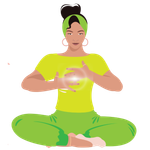
Place both hands over the centre of the chest, or place one hand over the heart and one hand over the upper abdomen.
The heart chakra is traditionally associated with love, compassion, connection, grief, forgiveness, and the meeting place between the more earthly and more spiritual aspects of our being. Reiki at the heart can be a beautiful way to return to softness when life has felt difficult.
Let this practice include compassion for yourself. You do not need to open your heart before you are ready. You may simply offer Reiki to the part of you that needs gentleness.
You may silently say:
May I meet myself with compassion. May I give and receive love with wisdom.
5. Throat Chakra: Truth and Expression

Place one or both hands gently over the throat area. If this feels uncomfortable, place one hand at the base of the throat and the other over the heart.
The throat chakra is connected with communication, self-expression, listening, and the courage to honour your truth. Reiki here can support clearer expression and a more compassionate relationship with your own voice.
This is not only about speaking. It is also about listening—to others, to silence, and to the quieter truths within yourself.
You may silently say:
I honour my voice. I listen with presence and speak with care.
6. Third Eye Chakra: Inner Wisdom and Perspective
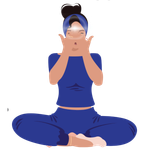
Place one or both hands lightly over the forehead. You may rest your fingertips near the space between the eyebrows, or simply cup the forehead with relaxed hands.
The third eye chakra is associated with intuition, inner seeing, imagination, discernment, and the ability to perceive life from a wider perspective. Reiki here can support moments of reflection, meditation, dreamwork, and quiet insight.
Do not strain to receive visions or answers. Insight sometimes appears as an image, a thought, or a feeling; at other times, it arrives later through ordinary life. Let your mind rest without demanding certainty.
You may silently say:
I trust the wisdom that arises in stillness.
7. Crown Chakra: Openness and Oneness

Place one hand gently on the top of the head, if comfortable, while the other hand rests over the heart or lower abdomen. You may also hold both hands a few inches above the crown.
The crown chakra is associated with spiritual openness, connection with universal life-force energy, and the recognition that we are not separate from the greater whole. In Reiki practice, this can be experienced as a quiet remembrance of oneness: the individual self resting within the vastness of life.
This does not need to be dramatic. A simple moment of spaciousness, gratitude, or peace is enough.
You may silently say:
I am part of the living whole. I allow Reiki to flow through me.
A Complete Chakra Self-Reiki Practice
When you have time for a longer session, move through all seven positions from the root chakra to the crown chakra. Beginning at the root can help you stay embodied and grounded as your attention gradually moves upward.
Before beginning, sit or lie down comfortably. Take a few natural breaths and set a simple intention, such as:
I invite Reiki to support the balance and harmony of my chakras for my highest good.
Spend several minutes at each position. If one area calls for more time, stay there. If a position feels uncomfortable, change it, hover your hands above the body, or move on. Your practice is not meant to become rigid.
At the end of the sequence, place both hands over your heart or lower abdomen. Rest quietly for a few moments and allow the whole practice to settle.
You may close with gratitude:
Thank you, Reiki, for this practice. May its benefits unfold in the way that serves my highest good.
Working Intuitively
A chakra practice can be structured, but it can also be intuitive. On some days, you may feel drawn immediately to your heart, your forehead, or your lower abdomen. Trust that impulse. Reiki does not require perfect technique.
You may also notice that certain positions feel neutral. This is completely normal. The absence of sensation does not mean that nothing is happening or that you are practising incorrectly. Reiki can be subtle. Consistency, presence, and willingness matter far more than dramatic experiences.
Over time, you may begin to recognise patterns in your practice. You may find that certain hand positions feel especially comforting during periods of change, creativity, grief, decision-making, or spiritual reflection. A Reiki journal can be a gentle place to record these observations without trying to interpret them too quickly.
A Practice of Wholeness
The chakra system reminds us that healing is not limited to one part of life. We are embodied, emotional, creative, relational, thoughtful, and spiritual beings. Reiki can meet us across all of these dimensions.
As you practise, remember that the purpose is not to become perfectly balanced or permanently serene. The purpose is to return—again and again—to presence, to compassion, and to your natural connection with Reiki.
Let the chakras be a map, not a demand. Let your hands become a place of listening. And let your self-Reiki practice remind you that you are already held within the greater wholeness of life.