
Reiki Master Level
Chapter 2 — The Master Symbol:
Dai Ko Myo
At Level 2, Cho Ku Rei, Sei He Ki and Hon Sha Ze Sho Nen expanded the ways Reiki could be practised and shared.
At the Master Level, another symbol enters the practice:
Dai Ko Myo
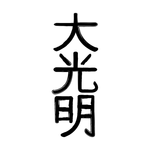
大光明
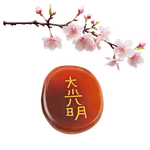
Often translated as Great Shining Light, Dai Ko Myo is the central symbol of Master-level Reiki. It is used in personal practice, spiritual contemplation, Reiju and Reiki attunement.
Its meaning unfolds through attunement, practice and time.
Name and Pronunciation
Dai Ko Myo is pronounced:
dye koh myoh
When invoking the symbol, intone its name slowly and clearly:
Dai Ko Myo.
Dai Ko Myo.
Dai Ko Myo.
The Great Shining Light
Dai Ko Myo is written with three characters:
大 — Dai
Great, vast or expansive.
光 — Ko
Light, radiance, illumination or shining.
明 — Myo
Bright, clear, luminous or illuminated.
Together, 大光明 may be translated as:
Great Shining Light
Great Bright Light
Great Radiant Light
The phrase points towards a dimension of Reiki that is expansive, luminous and all-encompassing.
The Highest Vibration of Reiki
Dai Ko Myo opens the practice to the highest vibration of Reiki—the most subtle, luminous and encompassing expression of universal life-force energy.
Its spiritual meaning cannot be fully contained in words. Great Shining Light offers a doorway, but the symbol is known more deeply through attunement, meditation, self-Reiki and lived practice.
As the practitioner’s relationship with Dai Ko Myo deepens, their perception of its meaning may deepen as well. What begins as a name and visible form gradually opens into direct experience.
The symbol is learned through the hands.
The Great Shining Light is understood through practice.
The Form Used in This Manual
In standard Chinese and Japanese writing, the three characters of 大光明 contain seventeen strokes. The form commonly transmitted in Western Reiki separates two joined strokes within 明, creating a nineteen-stroke sequence.
The Moonlit Manual follows this Western Reiki form intentionally.
A symbol lives not only through its historical origin, but also through the attention, intention and practice gathered around it. The nineteen-stroke form has been drawn, invoked and passed through Reiki attunements for generations. Through this shared practice, it has become part of the collective consciousness of Western Reiki.
A Buddhist story offers a quiet analogy.
An accomplished monk was travelling through a remote mountain region when he saw a beam of light rising into the sky. Knowing that such light must come from someone of deep spiritual attainment, he followed it to a small grass-roofed hut.
Inside, an old woman was reciting Om Mani Padme Hum. She told him that she had repeated the mantra faithfully for decades.
The monk rejoiced in her practice, but then noticed that she was pronouncing the mantra incorrectly. He taught her the correct pronunciation, and she gratefully began repeating it with great effort. Satisfied, the monk continued on his way.
When he looked back, the beam of light had disappeared.
After reflecting, he understood. He returned to the hut and told the woman that he had been mistaken: she should resume the pronunciation she had used before. She did—and the light rose once more into the sky.
The story reminds us that the life of a sacred practice is not held by technical correctness. It lives in the mind, the heart, trust, sustained attention and the intention carried through years of practice.
For this reason, the Moonlit Manual acknowledges the standard East Asian writing of 大光明 while teaching the nineteen-stroke form carried within Western Reiki.
Drawing Dai Ko Myo
The Western Reiki form taught in this manual contains nineteen strokes:
- 大 — strokes 1–3
- 光 — strokes 4–9
- 明 — strokes 10–19
Complete each character before moving to the next.
大 — Dai: Strokes 1–3

- Draw the horizontal stroke from left to right.
- Begin above the centre and sweep downward to the left, crossing the horizontal stroke.
- Begin at or near the intersection of the first two strokes and sweep downward to the right.
光 — Ko: Strokes 4–9
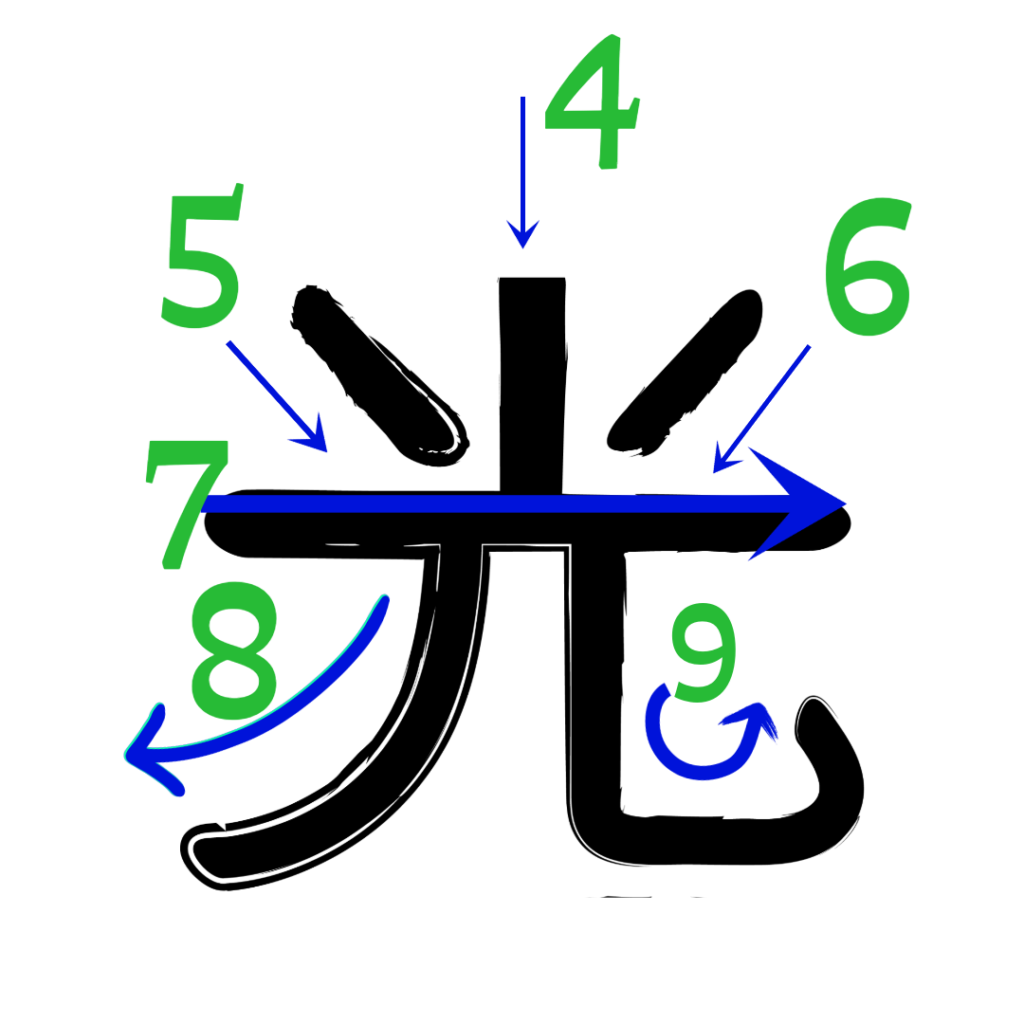
4. Draw a short vertical stroke downward at the top centre.
5. Draw a short diagonal stroke downward to the left.
6. Draw a short diagonal stroke downward to the right.
7. Draw the horizontal stroke from left to right beneath the upper strokes.
8. Begin below the horizontal stroke and sweep downward to the left.
9. Begin below the horizontal stroke, draw downward, curve to the right and finish with a slight upward hook.
明 — Myo: Strokes 10–19

10. Draw the left vertical stroke downward.
11. Draw the upper horizontal stroke from left to right.
12. Draw the right vertical stroke downward.
13. Draw the middle horizontal stroke from left to right.
14. Draw the lower horizontal stroke from left to right.
15. Draw the long left stroke of the right section downward, curving slightly to the left.
16. Draw the upper horizontal stroke from left to right.
17. Draw the right vertical stroke downward, finishing with a short inward hook to the left.
18. Draw the upper inner horizontal stroke from left to right.
19. Draw the lower inner horizontal stroke from left to right.
Follow the numbered stroke-order illustration as you learn. Keep the order consistent and complete all three characters before invoking the symbol.
Familiarity develops through repetition.
Invoking Dai Ko Myo
You may study the name, meaning and form of Dai Ko Myo before receiving your Master attunement. Formal practice with the symbol begins after attunement.
To invoke Dai Ko Myo:
- Draw the complete symbol once.
- Intone its name three times.
- Continue directly into your Reiki practice.
During silent practice, you may repeat the name inwardly.
Dai Ko Myo may be drawn:
- in the air before you;
- over your hands;
- upon the palm of one hand;
- over a self-Reiki hand position;
- towards a recipient;
- or through visualization.
Draw.
Intone.
Allow Reiki to flow.
The Four Reiki Symbols
The four Reiki symbols help practitioners engage with particular expressions of Reiki:
- Cho Ku Rei focuses, strengthens and activates.
- Sei He Ki supports harmony and practice involving mental and emotional patterns.
- Hon Sha Ze Sho Nen establishes connection beyond physical proximity and points towards the absence of separation.
- Dai Ko Myo opens Master-level practice to the Great Shining Light, spiritual awareness and attunement.
Cho Ku Rei, Sei He Ki and Hon Sha Ze Sho Nen are associated with Okuden, now commonly taught as Reiki Level 2. Dai Ko Myo belongs to advanced spiritual teaching and was later established as the Master symbol within Western Reiki.
Each symbol offers a doorway into Reiki.
Does Dai Ko Myo Replace the Other Symbols?
Some Western Reiki teachings describe Dai Ko Myo as containing the functions of the other symbols and therefore able to replace them.
A traditional Japanese understanding might explain the spiritual principle beneath this teaching. Symbols are training supports that help practitioners recognize particular expressions of Reiki. Through continuing meditation and practice, a practitioner may gradually outgrow dependence upon any symbol.
From this perspective, Dai Ko Myo does not replace the Level 2 symbols for distance, mental-emotional or other Reiki practices. Instead, it points towards a state of luminous awareness in which direct connection with Reiki no longer depends upon symbols.
Moon Petal Healing agrees with this understanding. Dai Ko Myo does not make Cho Ku Rei, Sei He Ki or Hon Sha Ze Sho Nen obsolete. Each remains a meaningful gateway through which Reiki may be practised and understood.
The luminous awareness towards which Dai Ko Myo points is not established merely by learning the symbol or receiving the Master attunement. It unfolds through continuing Reiki practice, meditation and contemplation of emptiness.
Continue to learn and use all four symbols sincerely. Through regular Reiki practice, meditation and contemplation of emptiness, dependence upon form may gradually soften as direct awareness matures.
Learn the symbols deeply.
Use them without attachment.
Beginning with Self-Reiki
After receiving the Master attunement, begin by bringing Dai Ko Myo into self-Reiki.
A simple practice is:
Gassho → Dai Ko Myo → Self-Reiki → Gassho
Settle in Gassho and invoke Dai Ko Myo. Place your hands comfortably and allow Reiki to flow where it is needed.
When the practice feels complete, return to Gassho.
This simple form is enough. Through regular practice, Dai Ko Myo gradually becomes familiar—not only as a symbol you draw, but as a presence within Reiki.
Learning the form and receiving the attunement open the path. Understanding continues to deepen through practice.
Reflection
- What does Great Shining Light mean to me?
- How does Dai Ko Myo deepen my understanding of Reiki?
The Path Ahead

Dai Ko Myo can be drawn, intoned and carried into practice. Yet the Great Shining Light also points beyond the visible form of the symbol.
The next chapter enters this deeper ground:
Reiki, Emptiness & the Clear Conduit
Reiki Level 3 Manual
- Chapter 1 — From Practising Reiki to Embodying the Practice
- Chapter 2 — The Master Symbol: Dai Ko Myo
- Chapter 3 — Reiki, Emptiness & the Clear Conduit
- Chapter 4 — Reiju: The Japanese Roots of Reiki Attunement
- Chapter 5 — The Shared Attunement Pathway
- Chapter 6 — In-Person Attunement for Reiki Level 1
- Chapter 7 — In-Person Attunement for Reiki Level 2
- Chapter 8 — In-Person Attunement for Reiki Master Level
- Chapter 9 — Distance Reiki Attunement Methods
- Chapter 10 — Structuring a Distance Reiki Attunement
- Chapter 11 — The Master’s Ongoing Practice
Come as you are.
Learn what calls to you, move at your own rhythm,
and return whenever you need a quieter place to begin again.