

Reiki Beyond Physical Proximity
Distance Reiki is one of the defining practices of Reiki Level 2.
At first, it may seem like the most mysterious part of the entire Reiki path.
In Level 1, practitioner and recipient share a physical space.
You can see the person.
You may place your hands gently on or above the body.
The session unfolds through ordinary physical presence.
Distance Reiki changes that structure.
The practitioner may be in one room while the recipient is in another.
They may be in different cities.
Different countries.
Different time zones.
And yet, within Reiki tradition, Reiki is understood to be offerable across that distance.
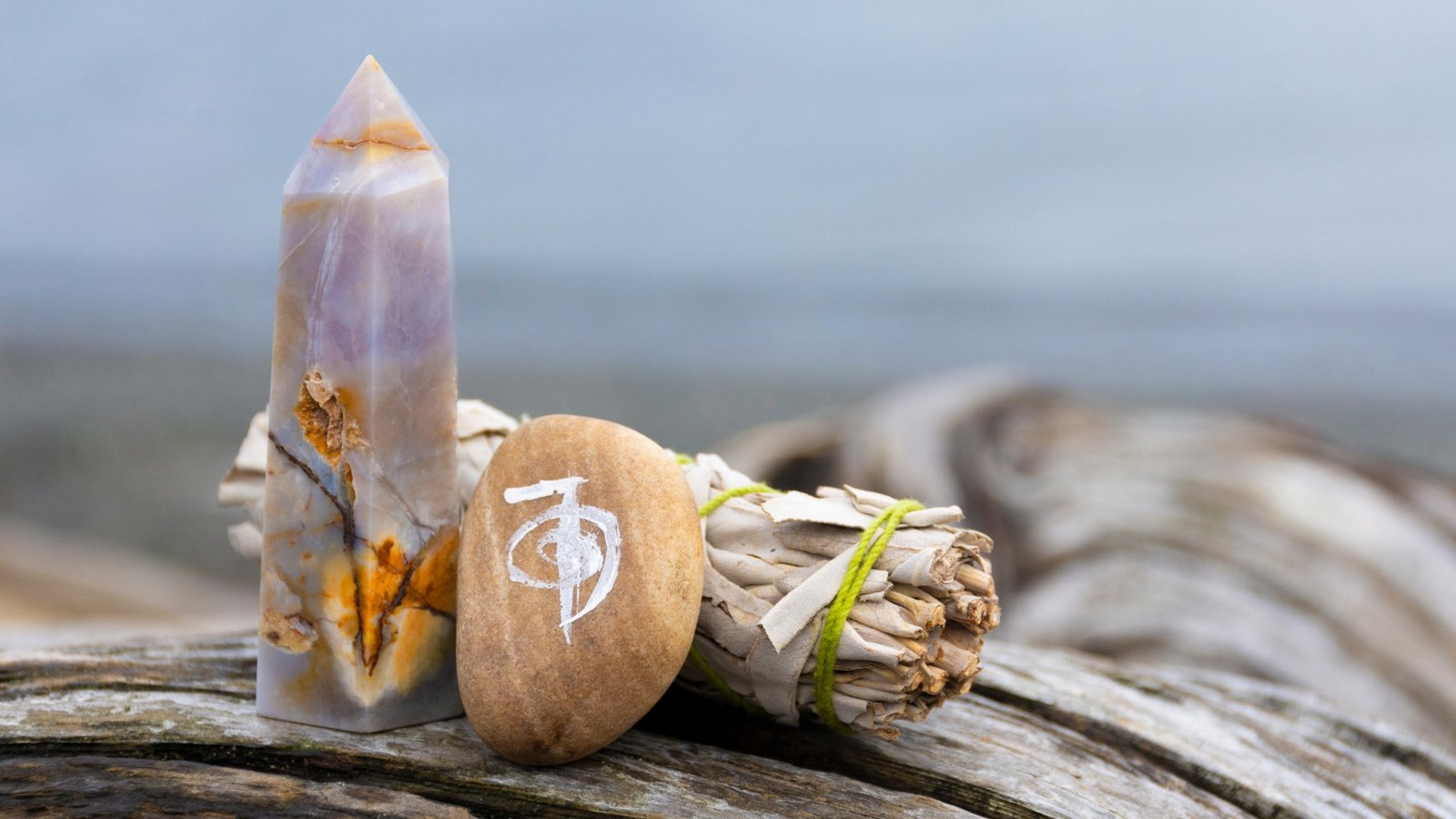
This is where Hon Sha Ze Sho Nen becomes central.
It is traditionally used to establish a Reiki connection beyond ordinary physical proximity.
Distance Reiki asks us to explore a profound question:
If Reiki is universal life-force energy, must physical distance limit the practice?
Within the spiritual framework of Reiki, the answer is traditionally no.
Distance Reiki Is Still Reiki
Although distance Reiki may feel very different from hands-on practice, its foundation remains the same.
You still:
- centre yourself;
- enter Gassho;
- establish a clear intention;
- invoke the symbols according to your practice;
- become receptive;
- offer Reiki;
- release attachment to the outcome;
- and close the session consciously.
The recipient may not be physically in front of you.
But the essential principle does not change.
You are not manufacturing Reiki.
You are not pushing energy across space through personal will.
You are becoming a conduit for Reiki.
The physical circumstances change.
The spiritual foundation does not.
The Role of Hon Sha Ze Sho Nen
Hon Sha Ze Sho Nen is traditionally known as the Distance Symbol.
Within Reiki practice, it is used to support connection beyond ordinary spatial separation.
Many lineages also associate it with working beyond ordinary ideas of time.
The symbol can therefore become a bridge.
Not a bridge in the physical sense.
A spiritual and energetic bridge.
It helps the practitioner establish the intention:
Reiki is being offered beyond the limitations of physical proximity.
Within the Moon Petal Healing approach, Hon Sha Ze Sho Nen is commonly incorporated into the layered sequence:
Cho Ku Rei
→ Sei He Ki
→ Cho Ku Rei
→ Hon Sha Ze Sho Nen
→ Cho Ku Rei
Each symbol is drawn while its name is silently repeated three times.
Then the practitioner pauses.
Becomes receptive.
And offers Reiki.
Distance Reiki and Mystery
Distance Reiki cannot currently be explained through an established scientific mechanism.
Modern science has not demonstrated that Reiki symbols transmit a measurable healing energy across space in the way Reiki tradition describes.
That does not mean the spiritual practice must be reduced to something merely symbolic.
It means we remain honest about the boundary between:
what is spiritually experienced,
and
what is scientifically demonstrated.
These are not the same category of knowledge.
A practitioner may experience distance Reiki as deeply real.
A recipient may report warmth, calm, tingling, emotion, imagery, sleepiness, or a strong sense of connection.
Sometimes practitioner and recipient may even describe experiences that feel meaningfully aligned.
Such experiences can be significant.
They can be part of the lived reality of Reiki practice.
But they do not automatically become scientific proof of a specific energetic mechanism.
A mature Reiki practice can hold mystery without needing to flatten it.
You can say:
I experience distance Reiki as real and meaningful.
And also:
I do not claim that modern science has fully explained how it works.
Both can be true at the same time.
Beyond the Five Senses
Human beings experience only a narrow range of what exists around us.
Our eyes detect only part of the electromagnetic spectrum.
Our ears detect only a limited range of sound frequencies.
Our senses do not directly perceive radio waves, magnetic fields, microscopic organisms, infrared radiation, or many other phenomena that nevertheless exist.
Science extends human perception through instruments and measurement.
Reiki raises the possibility that there may be aspects of human experience or energetic interaction that are not yet understood within current scientific models.
That possibility remains speculative.
But it leaves room for inquiry.
Reiki practice does not require you to prove the invisible before you explore it.
It asks you to practice with discernment.
Notice your experience.
Remain curious.
And avoid turning mystery into certainty simply because certainty feels more comfortable.
Distance Reiki Is Not Mental Projection
It is important to distinguish distance Reiki from simply thinking intensely about someone.
Distance Reiki is a Reiki practice.
Within the tradition, it involves:
- preparation;
- symbols;
- intention;
- receptivity;
- the understanding of the practitioner as conduit;
- and a conscious opening and closing of the practice.
You are not trying to force your thoughts toward another person.
You are not mentally pushing your will.
You are not concentrating until something happens.
In fact, excessive effort can become the opposite of the Reiki principle.
The practice is not:
I must make the Reiki reach them.
It is:
I establish the connection within Reiki and allow Reiki to flow.
This is a subtle but important difference.
The Practitioner Is Not the Sender in the Ordinary Sense
The phrase “sending Reiki” is commonly used.
It is convenient language.
But it can also create a misleading image.
You might imagine yourself producing energy in your body and then projecting it toward another person like a beam.
That is not necessarily the most helpful way to understand Reiki.
Within the traditional spiritual framework, the practitioner is better understood as a conduit.
You do not create Reiki.
You do not manufacture more Reiki through strain.
You do not have to push Reiki from point A to point B.
You enter the practice.
You establish the connection.
You become receptive.
Then you allow Reiki to work according to what is appropriate for the recipient.
So when we use the phrase “send Reiki,” remember what we mean:
offer Reiki across distance.
Not:
project your personal energy across distance.
Consent Is Essential
Distance does not remove the need for consent.
This is one of the most important principles of Level 2.
Because the recipient is not physically present, it may be tempting to think:
They will not know, so it cannot hurt.
Or:
Reiki can only help, so why ask?
But another person’s autonomy still matters.
Whenever reasonably possible, obtain consent before offering distance Reiki.
A simple question is enough:
Would you like me to offer you distance Reiki?
The recipient does not need to understand every detail of Reiki.
But they should know that you intend to practice for them and have the opportunity to say yes or no.
If they say no, respect it.
Do not reinterpret the refusal as resistance.
Do not assume they secretly need Reiki.
Do not override their decision because you believe Reiki knows better.
Reiki may be universal. Consent is still personal.
When Direct Consent Is Not Possible
There may be situations in which direct consent cannot easily be obtained.
Different Reiki traditions handle these circumstances differently.
Some practitioners choose not to offer distance Reiki without explicit consent.
Others use an intention that leaves the offering entirely open, such as:
May Reiki be available if it is welcomed and appropriate, and otherwise may it return to the universal flow.
This kind of practice is often presented as a way of respecting spiritual autonomy when direct communication is impossible.
Within Moon Petal Healing, explicit consent should remain the preferred standard whenever it is reasonably possible.
Where consent cannot be obtained, humility should increase rather than decrease.
You are not entitled to enter another person’s energetic or spiritual experience simply because your intention is kind.
Distance Reiki for Children
When offering distance Reiki to a child, appropriate parental or guardian consent is important.
The child’s own comfort and willingness also matter when they are old enough to express them.
A child should not be treated as if their preferences are irrelevant simply because an adult has agreed.
Keep the practice gentle.
Simple.
Non-frightening.
And free from claims about illness or outcomes.
Distance Reiki can be offered as a quiet spiritual or self-care practice rather than as a replacement for professional care.
Distance Reiki for Animals
Distance Reiki can also be practiced for animals.
Many practitioners find distance practice particularly appropriate for animals who may be fearful, ill, sensitive to touch, or simply prefer physical space.
As with in-person Animal Reiki, the practice should remain non-invasive.
You do not force energetic attention upon the animal.
You offer.
You allow.
You observe.
The animal may move away, fall asleep, become curious, settle, or show no obvious response.
Let the animal’s behaviour remain part of the conversation.
For companion animals, consent from the caregiver is appropriate.
And as always, Reiki does not replace veterinary care.
Agreeing on a Time
Some practitioners prefer to arrange a specific time for distance Reiki.
For example:
I will offer Reiki from 8:00 to 8:30 tonight.
The recipient may choose to lie down, sit quietly, meditate, or simply continue with their evening.
There is no requirement that they remain perfectly still.
An agreed time can be helpful because it creates a clear shared container.
It may also allow the recipient to notice their own experience during the session.
Other practitioners may arrange to offer Reiki sometime within a broader period.
Both approaches can be valid.
Clarity matters more than rigidity.
Does the Recipient Need to Be Awake?
No.
A recipient does not need to remain awake for distance Reiki.
They may fall asleep.
They may already be sleeping when the session begins.
They may be resting quietly.
They may be going about ordinary activities.
Within Reiki tradition, conscious attention from the recipient is not always considered necessary for the practice to be offered.
However, if the recipient has agreed to the session and wants to observe their experience, choosing a quiet time may be helpful.
Falling asleep does not mean the session failed.
Nor does staying awake mean it was stronger.
What Might a Recipient Experience?
Recipients report many different experiences during distance Reiki.
They may notice:
- warmth;
- coolness;
- tingling;
- heaviness;
- lightness;
- relaxation;
- sleepiness;
- emotional movement;
- imagery;
- vivid dreams afterward;
- a sense of calm;
- a feeling of connection;
- or nothing unusual at all.
No single response proves that Reiki is working.
And the absence of sensation does not mean that the practice failed.
Just as in Level 1, avoid turning sensation into a performance standard.
Reiki is not more valid because someone feels dramatic energy.
What Might the Practitioner Experience?
The practitioner may also notice sensations.
Perhaps your hands become warm.
Perhaps you feel pressure, tingling, pulsing, heaviness, spaciousness, or emotional movement.
You may think of the recipient.
You may see an image.
You may suddenly feel drawn to a particular part of the body.
You may experience very little.
All of these can occur.
Observe without immediately deciding what they mean.
This is especially important in distance Reiki because the physical recipient is not present for you to see.
The mind may be more tempted to create stories.
Return to discernment.
Distance Reiki Is Not Distance Diagnosis
Suppose you are offering distance Reiki and suddenly feel pressure in your chest.
This does not mean the recipient has a heart problem.
Suppose you imagine their abdomen.
This does not mean there is an illness there.
Suppose sadness arises in you.
This does not prove the recipient is secretly depressed.
These impressions may feel meaningful.
You can note them privately.
But do not automatically transform them into claims about the recipient.
A responsible practitioner distinguishes:
I experienced this
from
This is objectively true about you.
That distinction protects both practitioner and recipient.
Intention Without Control
Before beginning distance Reiki, you may establish an intention.
For example:
I offer Reiki to this recipient with their consent, for their highest good and according to what is most appropriate for them.
This sets the context.
But intention should remain different from demand.
Avoid:
Make their headache disappear.
Make them sleep tonight.
Make this illness improve.
Make them feel what I want them to feel.
Instead:
May Reiki support what is needed.
This leaves room for the traditional understanding that Reiki works according to the recipient’s needs rather than the practitioner’s expectations.
The recipient may also have hopes.
Respect them.
But do not promise that Reiki will produce a particular result.
Distance Reiki and the Desire to Help
When someone we love is suffering, it can be difficult to release the outcome.
You may deeply want them to feel better.
That desire is human.
It can come from love.
But it can also create strain in the practice.
You may begin pushing mentally.
Trying harder.
Worrying whether enough Reiki is flowing.
Watching the clock.
Searching for signs.
If you notice this, return.
Gassho.
Breath.
The symbols.
Presence.
Then remind yourself:
You do not have to become the source of their healing.
You can care deeply without controlling.
Offer Reiki.
Let love be present.
And release the demand that the session unfold according to your fear or hope.
Distance Reiki and Oneness
Distance Reiki naturally invites contemplation of oneness.
At the ordinary level, two people are separate.
Each has a body.
A history.
A location.
A mind.
Boundaries.
And autonomy.
These distinctions matter.
Yet the deeper spiritual perspective asks:
Are we only separate?
Every living being participates in systems larger than itself.
We share atmosphere.
Earth.
Time.
Biology.
Relationship.
History.
And the same cosmos.
Within Reiki’s spiritual framework, universal life-force energy is understood as not belonging to one individual.
It is universal.
From this perspective, distance Reiki becomes less about one separate person throwing energy toward another separate person and more about becoming receptive within a field of connection that already exists.
This is one way to contemplate non-duality.
The practitioner is not standing outside the universe manipulating it.
The practitioner is part of the universe.
So is the recipient.
So is Reiki.
Connection Does Not Mean Possession
The language of oneness can be beautiful.
But it should never become an excuse for spiritual intrusion.
To say:
We are interconnected
is not to say:
I have the right to enter your experience whenever I choose.
Connection does not mean possession.
Oneness does not erase consent.
Non-duality does not eliminate ordinary relational responsibility.
A mature spiritual practice can hold both:
At a deep level, life is profoundly interconnected.
And:
At the human level, your boundaries are yours.
These truths do not cancel one another.
They strengthen one another.
Distance Reiki Across Time Zones
Because practitioner and recipient may live in different parts of the world, time zones can become relevant.
If you agree on a specific session time, make sure both people understand what that time means in their own location.
For example:
8:00 p.m. Toronto time / 5:00 p.m. Vancouver time.
This is a small practical detail, but it prevents confusion.
Distance Reiki may explore profound questions about space and time.
Scheduling still benefits from a clock.
Spiritual practice and ordinary practicality can coexist beautifully.
Distance Reiki for a Situation
Some Reiki traditions also use distance practice for situations rather than only individuals.
Examples may include:
- an upcoming conversation;
- a family transition;
- travel;
- a meeting;
- a shared project;
- or another event involving uncertainty.
When practicing this way, be mindful of who is involved.
Avoid using Reiki as an attempt to manipulate the choices of other people.
For example, rather than:
Make this person agree with me.
you might offer:
May Reiki support clarity, compassion, and the most appropriate unfolding of this situation.
This allows Reiki to accompany the situation without turning spiritual practice into a tool for control.
Distance Reiki and Future Events
Hon Sha Ze Sho Nen is also commonly used in practices involving future events.
You may offer Reiki toward:
- an examination;
- a presentation;
- travel;
- an interview;
- a difficult conversation;
- a medical appointment;
- or another anticipated experience.
Again, the purpose is not to guarantee an outcome.
You might hold:
May Reiki support me in meeting this experience with calm, clarity, and openness.
Then take ordinary practical action.
Prepare for the examination.
Practice the presentation.
Pack for the trip.
Attend the appointment.
Have the conversation.
Reiki can accompany life.
It does not replace living it.
Distance Reiki and the Past
Some Reiki traditions also use Hon Sha Ze Sho Nen in relation to the past.
This is not about physically changing an event that has already happened.
The past remains the past.
But the present relationship with the past can change.
You may offer Reiki while gently holding a memory in awareness.
Perhaps the intention is compassion.
Forgiveness.
Acceptance.
Understanding.
Or simply presence.
Be careful with emotionally intense memories.
Reiki is not a replacement for trauma therapy or other appropriate psychological support.
There is no need to reopen painful experiences merely because you now practice Level 2 Reiki.
Gentleness remains part of discernment.
Does Distance Reiki Need a Photograph?
No single method is required.
Some practitioners use a photograph of the recipient.
Others write the person’s name on a piece of paper.
Others visualize the recipient.
Some use a surrogate object.
Some place their hands around an imagined energetic representation.
Others simply invoke Hon Sha Ze Sho Nen and establish the connection through intention.
These are methods of focus.
They will be explored more fully in the next chapter.
The photograph is not the Reiki.
The paper is not the Reiki.
The visualization is not the Reiki.
The object is not the Reiki.
These tools help the practitioner establish and hold the practice.
Do You Need to Visualize the Recipient Clearly?
No.
Some people can create detailed mental images.
Others cannot.
You do not need to see a vivid picture of the recipient in your mind.
You may simply know:
This practice is for this person.
Their name may be enough.
A photograph may help.
A written name may help.
Or the agreed intention may be sufficient.
Do not turn visualization ability into another measure of spiritual talent.
Can Distance Reiki Be Offered to More Than One Person?
Different Reiki traditions practice group distance Reiki in different ways.
You may eventually work with:
- a family;
- a group that has consented;
- participants in a Reiki circle;
- or a shared intention.
But when learning, it is often helpful to begin with one recipient.
This keeps the practice simple.
It allows you to notice your own experience without unnecessary complexity.
Depth before scale.
Closing the Distance Connection
Just as an in-person session has a beginning and an end, distance Reiki should have a clear closing.
When the session feels complete:
pause.
Bring your hands into Gassho.
Offer gratitude according to your own practice.
You may invoke Cho Ku Rei as part of the closing if that is how you work with the symbols.
Then consciously recognize:
The session is complete.
Release the recipient.
Release the intention.
Return your awareness to your own body.
Notice your feet.
Your breathing.
The room around you.
This closing matters.
Holding space does not mean remaining energetically or mentally preoccupied with the recipient afterward.
You offer.
You close.
You return.
After the Session
After distance Reiki, give yourself a moment before immediately returning to activity.
You might:
- drink some water;
- stretch;
- sit quietly;
- write a short journal note;
- practice Kenyoku;
- or simply take several breaths.
There is no need for elaborate energetic cleansing.
You are not assuming that you have absorbed another person’s problems.
The purpose is simply to transition.
If you communicate with the recipient afterward, keep the conversation open rather than leading.
Instead of:
Did you feel the energy in your chest?
you might ask:
How was the experience for you?
This allows their experience to remain theirs.
Comparing Experiences Without Forcing Meaning
One interesting part of distance Reiki can be comparing notes afterward.
Perhaps you felt warmth in your hands at a certain point and the recipient says they felt warmth at a similar time.
Perhaps you thought of an image that seems meaningful to them.
Perhaps nothing aligns at all.
Allow curiosity.
But resist the urge to turn every coincidence into proof.
Likewise, do not dismiss meaningful experiences simply because they are difficult to explain.
You can say:
That was interesting.
That felt meaningful.
I wonder about that.
These are spacious responses.
You do not have to decide exactly what every experience means.
A Simple Distance Reiki Foundation Practice
Before learning multiple distance methods, you can begin with a very simple structure.
1. Obtain Consent
Know clearly who the session is for.
2. Prepare Yourself
Sit comfortably.
Settle your breathing.
Enter Gassho.
3. Establish the Intention
For example:
I offer Reiki to [recipient] with their consent, for their highest good and according to what is most appropriate.
4. Invoke the Symbols
Use the Level 2 sequence taught in this manual:
Cho Ku Rei
→ Sei He Ki
→ Cho Ku Rei
→ Hon Sha Ze Sho Nen
→ Cho Ku Rei
Silently repeat each symbol’s name three times while drawing it.
5. Become Receptive
Pause.
Do not push.
Do not strain.
Allow Reiki.
6. Offer the Session
Remain in practice for the amount of time you have chosen.
7. Close
Bring your hands into Gassho.
Recognize that the practice is complete.
Release the recipient.
Return fully to yourself and your surroundings.
Simple is enough.
Your First Distance Reiki Experiences
When you begin practicing distance Reiki, choose recipients who understand that you are learning.
A friend, family member, or fellow Reiki practitioner who is comfortable participating can be helpful.
Agree upon a time.
Keep the first sessions relatively simple.
Afterward, ask what they noticed without telling them first what you experienced.
This can help reduce suggestion.
For example:
What did you notice during the session, if anything?
Then listen.
Do not require them to report something extraordinary.
If they say:
I fell asleep.
That is enough.
If they say:
I didn’t notice much.
That is enough.
If they describe something powerful, receive that too.
Your practice does not need to prove itself through the recipient’s report.
Trust Without Blindness
Reiki practice involves trust.
You trust the practice enough to enter it.
You trust that you do not have to control everything.
But trust does not require abandoning discernment.
You can trust Reiki while asking questions.
You can value spiritual experience while recognizing uncertainty.
You can work with mystery without making every mystery into fact.
You can believe deeply in Reiki and still maintain intellectual humility.
This balance is not a weakness.
It is one of the ways spiritual practice becomes mature.
The Deeper Teaching of Distance Reiki
At first, distance Reiki seems to teach:
Reiki can be offered when the recipient is far away.
But beneath that is another teaching.
Perhaps the distance itself is not the deepest issue.
Perhaps the practice is asking:
What is connection?
What does it mean to be present with someone who is not physically present?
What does it mean to care without controlling?
What does it mean to offer without possessing?
What does it mean to trust something that cannot be entirely explained?
What does it mean to recognize separation and oneness at the same time?
Distance Reiki turns these questions into practice.
Reflection
Before moving on, consider:
- What do I believe distance Reiki is?
- What feels mysterious about it to me?
- Can I allow that mystery without needing to explain everything?
- What is the difference between offering Reiki and projecting personal energy?
- What does being a conduit mean when the recipient is far away?
- How do I understand the role of Hon Sha Ze Sho Nen?
- Why does consent still matter across distance?
- Can I respect someone’s autonomy even when they are not physically present?
- What expectations do I have about what a recipient should experience?
- Can I practice without demanding confirmation?
- How will I distinguish my own sensations from claims about the recipient?
- What does interconnectedness mean to me?
- Can I contemplate oneness without erasing boundaries?
- What would it mean to trust Reiki without surrendering discernment?
Let these questions remain with you.
Distance Reiki is not only a technique.
It can become a profound contemplation of relationship itself.
Looking Ahead
You now understand the foundation of distance Reiki:
the role of Hon Sha Ze Sho Nen,
the importance of consent,
the distinction between Reiki and personal projection,
the practitioner’s role as conduit,
the need to release outcomes,
and the mystery of connection beyond ordinary physical proximity.
The next step is practical.
In the next chapter, Distance Reiki Methods, we will explore several ways to structure a distance Reiki practice, including working with:
- a photograph;
- a written name;
- visualization;
- a surrogate object;
- your hands;
- and simple direct intention.
These methods are not competing systems.
They are different ways of helping the practitioner establish and hold the connection.
The method is the container.
Reiki is the practice within it.