
Learning to Become Quiet Enough to Receive
Reiki practice can look very simple from the outside.
Hands rest on the body.
The practitioner becomes still.
The recipient rests.
Yet beneath this simplicity is an important inner practice.
Reiki asks us to become present.
Rather than constantly deciding what should happen, the practitioner learns to quiet the mind, soften personal intention, notice what arises, and allow Reiki to be offered without forcing an outcome.
This is one reason the Japanese roots of Reiki include practices involving meditation, breathing, attention, intuition, and the cultivation of inner stillness.
In this chapter, we will explore several foundational techniques commonly taught within Usui Reiki traditions:
- Gassho — bringing the hands and attention together in stillness;
- Joshin Kokyu Ho — a breathing and centering practice;
- Kenyoku Ho — a practice sometimes translated as “dry bathing”;
- Hatsurei Ho — a structured practice for cultivating one’s relationship with Reiki;
- Reiji Ho — becoming receptive to intuitive guidance during Reiki practice;
- Byosen Reikan Ho — noticing sensations or areas that draw your attention.
Different Reiki lineages teach these techniques somewhat differently.
You may encounter variations in hand movements, breathing patterns, sequence, terminology, and interpretation.
That is normal.
The purpose of this chapter is not to establish one rigid version as the only correct form.
Instead, these practices are offered as ways of cultivating something deeper:
presence, receptivity, discernment, and a clearer relationship with Reiki.
Technique Is Not the Goal
Before learning individual techniques, remember an important principle.
More techniques do not necessarily make someone a deeper Reiki practitioner.
It is possible to memorize many methods while remaining distracted, impatient, or attached to results.
It is also possible to practice something very simple with extraordinary presence.
Techniques provide structure.
They give the mind and body a way to enter practice.
But eventually, the technique should support something quieter.
You become present.
You become receptive.
You allow.
Within the traditional spiritual understanding of Reiki, you are not trying to manufacture life-force energy through personal effort.
You are learning to become a clearer conduit for Reiki.
This distinction will become increasingly important as your practice develops.
1. Gassho
Bringing the Hands and Mind Together
You have already encountered Gassho earlier in Level 1.
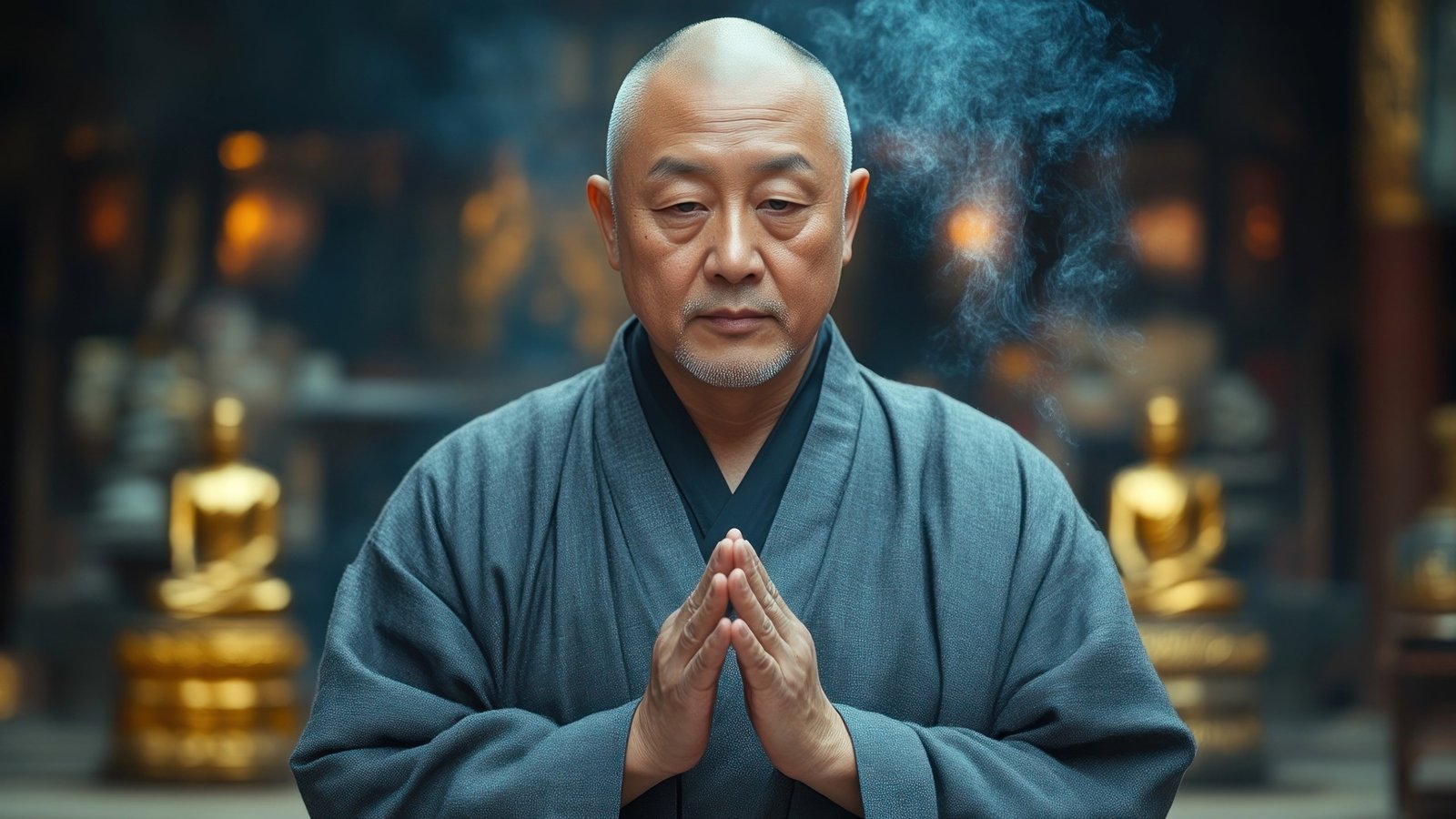
The Japanese word gassho refers to bringing the palms together, a gesture found in Japanese Buddhist and other contemplative contexts.
Within Reiki practice, Gassho can become much more than a hand position.
It is a way of arriving.
Place your palms gently together in front of your chest.
Allow your shoulders to relax.
Let the hands meet without pressing them tightly together.
Bring your attention toward the place where the middle fingers meet.
Breathe naturally.
You do not need to control the breath.
You do not need to stop your thoughts.
When a thought arises, notice it.
Then gently return your attention to the meeting of the fingers.
Again.
And again.
And again.
This returning is the practice.
Practicing Gassho
You can practice Gassho for a few minutes before self-Reiki or before offering Reiki to another person.
You may also practice it independently as a quiet meditation.
A simple practice might look like this:
- Sit comfortably with your spine naturally upright.
- Bring your palms together in front of your chest.
- Close your eyes if that feels comfortable.
- Allow your breathing to settle naturally.
- Bring your attention to the point where your middle fingers meet.
- Notice thoughts without following them.
- Return your attention gently to your hands.
- Remain for several minutes.
You may conclude by reflecting on the Five Reiki Principles.
There is nothing you need to achieve.
Gassho is not about forcing the mind to become empty.
It is about learning to return.
2. Joshin Kokyu Ho
Breathing to Settle the Mind
Joshin Kokyu Ho is commonly translated in Reiki teaching as a breathing method for cleansing or purifying the mind or spirit.
Different lineages may teach variations of the practice.
At its heart, it combines breathing, attention, and the traditional Reiki understanding of connection with universal life-force energy.
The practice can be used before self-Reiki, as part of Hatsurei Ho, or simply as a centering practice.
A Simple Joshin Kokyu Ho Practice
Sit comfortably.
Allow your shoulders, jaw, and abdomen to soften.
Place your hands comfortably on your thighs or in your lap.
Bring your awareness to the area of the hara, or lower abdomen.
In Japanese contemplative traditions, the lower abdominal region is often treated as an important centre of grounding and embodied awareness.
Begin breathing gently.
As you inhale, imagine or sense Reiki entering through the crown of the head and flowing down toward the lower abdomen.
Allow your awareness to settle there.
Pause naturally without straining.
As you exhale, imagine Reiki expanding throughout your body and beyond you.
Then inhale again.
Receive.
Exhale.
Expand.
Continue at an easy pace.
There is no need to breathe forcefully or hold the breath for uncomfortable periods.
If visualization does not come naturally to you, you do not need to create vivid imagery.
You might simply use the breath as an anchor:
Inhale — receive.
Exhale — release and expand.
The purpose is not to prove that you can perceive energy.
The practice is an invitation to become quiet, grounded, and receptive.
Do Not Force the Breath
Breathing practices should feel comfortable.
If you become dizzy, light-headed, anxious, or uncomfortable, return to your ordinary breathing and stop the exercise if necessary.
Long breath holds and forceful breathing are not required for Reiki.
Gentleness remains part of the practice.
Your ability to practice Reiki is not measured by how long you can hold your breath or how intensely you can visualize energy.
3. Kenyoku Ho
Dry Bathing
Kenyoku Ho is commonly translated as “dry bathing.”
It is a simple practice involving intentional sweeping movements across the body. Variations exist among Reiki lineages, particularly in the direction and sequence of the movements.
Kenyoku may be practiced before or after Reiki as a way of marking a transition.
You might think of it as a ritual of returning to yourself:
I am arriving for practice.
Or afterward:
The practice is complete.
Within Reiki’s energetic framework, some practitioners understand Kenyoku as clearing or separating unwanted energetic influences.
You may work with that traditional spiritual interpretation if it is meaningful to you.
It can also simply function as an embodied ritual for grounding attention and establishing a clear boundary around the beginning or end of practice.
Practicing Kenyoku Ho
Because different Reiki traditions preserve different versions of Kenyoku Ho, follow the particular form taught within your lineage when one has been given to you.
A commonly taught form uses gentle sweeping movements across the upper body and along the arms.
Stand or sit comfortably.
Take a quiet breath.
Using one hand, make a deliberate sweeping movement diagonally across the upper torso.
Repeat from the opposite side.
Complete another diagonal sweep.
Then make sweeping movements along the arms, moving deliberately from the shoulder area toward the hand.
Keep the movements comfortable and intentional rather than forceful.
As you practice, remain aware of your breathing and body.
You do not need to imagine that you are physically scraping something away.
Let the movements serve as a transition.
Then pause.
Notice yourself.
Notice the room.
Notice that you are here.
Clearing Does Not Mean Fear
Energetic clearing practices can sometimes become surrounded by fear.
A practitioner may begin worrying constantly about absorbing “negative energy” from other people.
This can make spiritual practice more anxious rather than more grounded.
Kenyoku does not need to become a ritual driven by fear.
You do not need to regard other people as energetically dangerous.
You do not need to believe that every difficult emotion belongs to someone else.
And you do not need to perform increasingly elaborate rituals to make yourself safe enough to practice Reiki.
Use Kenyoku as a practice of awareness and transition.
Clear the moment. Return to yourself. Continue.
4. Hatsurei Ho
Cultivating Your Reiki Practice
Hatsurei Ho is a structured Japanese Reiki practice commonly used for personal cultivation.
The exact sequence varies among Reiki lineages and teachers, but versions of Hatsurei Ho often bring together several practices, including centering, Kenyoku, Joshin Kokyu Ho, Gassho, focused awareness, and reflection on the Reiki Principles.
Rather than thinking of Hatsurei Ho as another technique you must memorize perfectly, think of it as a container for daily Reiki practice.
It brings together body, breath, attention, and intention.
A Simple Hatsurei Ho-Inspired Practice
Your personal sequence may look something like this:
1. Arrive
Sit or stand comfortably.
Take a moment to recognize that you are beginning your Reiki practice.
Allow the concerns of the day to remain outside the practice for a few moments.
2. Kenyoku
Perform the dry-bathing movements taught within your lineage.
Let them mark your transition into practice.
3. Joshin Kokyu Ho
Settle into gentle breathing.
Bring awareness toward the lower abdomen.
With each breath, become quieter and more receptive.
4. Gassho
Bring your palms together.
Allow your attention to rest where the middle fingers meet.
Notice.
Return.
Become still.
5. Focused Reiki Awareness
Remain in Gassho or another comfortable position.
Allow yourself to become receptive to Reiki.
There is nothing you need to push outward.
Nothing you need to manufacture.
Nothing you need to prove.
Simply remain present.
6. The Five Reiki Principles
Bring the Reiki Principles to mind:
Just for today, do not anger.
Just for today, do not worry.
Just for today, be grateful.
Just for today, work honestly.
Just for today, be kind to every living thing.
Do not repeat them mechanically.
Let yourself notice whether one principle speaks particularly strongly to your life today.
7. Close
Bring your awareness back to your body and surroundings.
Take a natural breath.
Allow the practice to end.
Hatsurei Ho as Daily Practice
Hatsurei Ho can be especially useful when you want to practice Reiki but are unsure where to begin.
Instead of waiting until you feel spiritual, energetic, calm, or inspired, you simply begin the sequence.
The structure carries you into practice.
Over time, familiar movements can become signals to the mind:
Now I become still.
Now I return.
This is one of the gifts of ritual.
Ritual does not have to be elaborate or supernatural.
Sometimes it is simply a familiar doorway into a particular quality of awareness.
5. Reiji Ho (霊示法)
Allowing Yourself to Be Guided
As you become comfortable with Reiki, you may begin to explore a less structured way of choosing where to place your hands.
This is where Reiji Ho becomes useful.
Reiji Ho is generally taught as a practice of becoming receptive to guidance within Reiki rather than deciding entirely through intellectual thought where the hands should go.
This can sound mysterious at first.
It does not need to be.
Imagine that you are practicing Reiki and become quiet enough to notice a subtle inclination:
I would like to place my hands here.
Or:
I feel drawn to remain at this position a little longer.
You do not necessarily know why.
You simply notice the inclination.
This is different from making a claim about what another person’s body needs.
Replace the “Practicing Reiji Ho” section with this:
Practicing Reiji Ho
Reiji Ho is often practised through three simple steps. The purpose is not to diagnose, fix, or control an outcome, but to become centred, humble, and receptive within your Reiki practice.
Step 1: Focus and Centre in Gassho
Bring your hands together in front of your chest in the Gassho position.
Close your eyes and allow your breathing to settle. Let your attention move away from distractions, expectations, and mental planning. You may simply rest in quietness for a few moments, feeling present and centred.
Step 2: Align with the Highest Good
Silently set an intention for the recipient’s well-being and highest good.
You may use a simple inward prayer or intention such as:
May this Reiki practice be for the recipient’s highest good.
This is a moment to release the need to fix anything, prove anything, or create a particular result. Within the spiritual framework of Reiki, you are not directing the process through personal will; you are allowing yourself to be a humble conduit for the practice.
Step 3: Ask for Guidance
Keeping your hands together in Gassho, gently raise them to your forehead, lightly touching the area of the Third Eye chakra—the space between the eyebrows.
Silently ask for guidance about where to begin or where to place your hands next. Then lower your hands and notice whether a particular area, hand position, or direction quietly draws your attention.
You may notice an inclination such as:
I would like to place my hands here.
Or:
I feel drawn to remain at this position a little longer.
You do not need to know why. You simply notice the inclination and, if it feels appropriate, follow it gently.
If nothing arises, that is completely fine. Use your standard Reiki hand positions. There is no need to invent intuition, force a message, or interpret every spontaneous thought as spiritual guidance.
Reiji Ho is not a performance of psychic ability. It is a practice of receptivity, presence, gentle awareness, and trust.
Intuition and Gentle Awareness
As you practice Reiji Ho, maintain an important distinction.
You might experience:
I feel drawn to place my hands near the shoulders.
That is an observation about your experience.
It is very different from saying:
Reiki is telling me that this person has a problem in their shoulders.
The first leaves room for uncertainty.
The second turns an internal impression into a claim about another person.
Remain with the first.
You can follow a gentle inclination without needing to explain it.
This allows intuition and discernment to coexist.
6. Byosen Reikan Ho (病腺霊感法)
Learning to Notice
Byosen Reikan Ho is a traditional Japanese Reiki practice in which the practitioner slowly scans the body with their hands, noticing areas that feel different or seem to draw their attention.
The word byosen is often translated as “a focal point of imbalance,” while reikan ho refers to receiving spiritual or intuitive impressions. In Reiki practice, this does not mean guessing what is wrong with someone or identifying an illness. It is a quiet method of noticing your own experience as you move your hands over or near the body.
Rather than deciding in advance where Reiki should be offered, you allow your hands to move slowly and notice whether one area feels different from another.
Practitioners may notice sensations such as:
- warmth or coolness;
- tingling or buzzing;
- pulsing;
- heaviness or lightness;
- a subtle sense of pressure;
- a feeling of attraction toward an area;
- a change in sensation as they move their hands;
- or simply an inclination to remain somewhere longer.
These experiences are personal. They may vary from practitioner to practitioner, from one practice session to another, or may not arise at all.
For Level 1, the most important skill is observation.
How to Practise Byosen Reikan Ho
Step 1: Centre Yourself
Begin by becoming quiet and present. You may take a few slow breaths, bring your hands into Gassho, or use Reiji Ho to settle your personal expectations.
Set a simple intention to offer Reiki for the recipient’s highest good.
Step 2: Begin the Scan
With the recipient’s consent, hold your hands a comfortable distance above the body, or use gentle hands-on placement where appropriate.
You may begin near the head and move gradually downward through the body. Keep your hands relaxed. There is no need to hurry or search for something dramatic.
Step 3: Notice Changes
As you move from one area to another, notice what you experience in your palms, fingers, body, or awareness.
Perhaps one area feels warmer. Perhaps your hands tingle. Perhaps you notice a quiet pull to pause. Perhaps nothing feels different.
All of these experiences are acceptable.
Step 4: Pause and Offer Reiki
If an area draws your attention, you may gently pause there and offer Reiki through hands-on or hands-above-body practice.
Remain there for as long as feels natural. You may continue when your own sense of attention shifts, when the sensation changes, or when you simply feel ready to move on.
You can also develop this awareness during self-Reiki. Notice how different hand placements feel, without deciding in advance what those sensations must mean.
Byosen Is Not Diagnosis
This point is essential.
Byosen Reikan Ho does not give you medical diagnostic authority.
A sensation in your hands is an experience within your Reiki practice. It does not tell you that someone has inflammation, pain, illness, trauma, emotional blockage, or any other medical or psychological condition.
You can notice:
My hands became warmer here.
I felt drawn to remain here.
This area felt different to me.
And then allow the observation to remain just that: an observation.
Notice without diagnosing.
Byosen Reikan Ho is a gentle way of becoming more attentive during Reiki practice—not a method for identifying what is medically or emotionally wrong with another person.
Reiji and Byosen: Guidance Without Control
Reiji Ho and Byosen Reikan Ho introduce an important transition in your Reiki practice.
At first, you may rely heavily on predetermined hand positions.
This is useful.
Structure helps beginners relax.
You do not have to wonder constantly where your hands should go next.
Over time, however, you may begin combining structure with receptivity.
Perhaps you follow your normal hand positions but remain somewhere longer.
Perhaps you notice that your attention repeatedly returns to one area.
Perhaps your hands naturally want to move somewhere different.
You can allow this flexibility without turning it into certainty.
The practice becomes a conversation between structure and listening.
And beneath both is the same principle:
You do not need to control Reiki.
Becoming a Clear Conduit for Reiki
The techniques in this chapter point toward a central understanding that will follow you through every level of the Moon Petal Healing Reiki path.
Within the spiritual framework of Reiki, the practitioner is not understood as the ultimate source of the healing energy.
You are a conduit for Reiki.
This means that your task is not to summon enough personal power.
It is not to force energy through your hands.
It is not to mentally command Reiki to fix a particular problem.
And it is not to decide what outcome another person should have.
Instead, your practice is to become clear enough to allow Reiki to flow without continually inserting your own expectations.
Gassho teaches you to become still.
Joshin Kokyu Ho teaches you to breathe and receive.
Kenyoku helps you mark boundaries and transitions.
Hatsurei Ho cultivates your relationship with Reiki.
Reiji Ho teaches receptivity.
Byosen teaches attentive observation.
Different techniques.
One underlying movement:
less forcing, more listening.
Reiki Beyond Personal Will
This can be difficult at first.
When someone we care about is struggling, naturally we want something good to happen.
We may think:
I want Reiki to take away their pain.
I want them to feel peaceful.
I want this situation to improve.
These wishes can arise from compassion. You do not need to feel guilty for having them.
But Reiki practice invites you to loosen your grip on the outcome.
Within the traditional spiritual understanding of Reiki, Reiki is universal life-force energy: intelligent in its own way and not directed solely by the practitioner’s personal will. Reiki is trusted to go where it is most needed and to support the whole person—body, mind, emotions, and spirit—rather than being sent only toward the symptom that is most visible.
What appears on the surface may not be the deepest source of difficulty. A person may arrive focused on physical discomfort, stress, grief, fear, or a difficult life situation. In Reiki practice, the practitioner does not need to decide what should be addressed first or attempt to force an outcome. Reiki is allowed to move according to the recipient’s highest good.
This does not mean that Reiki replaces medical, psychological, or other professional care, nor does it promise a particular result. It means releasing the assumption that we always know what another person needs.
The recipient may also arrive with expectations. They may want a particular sensation, an answer, or a specific result.
You can respect their hopes without promising that Reiki will fulfil them.
Neither practitioner nor recipient needs to control the experience.
You create the conditions for practice. You offer Reiki. Then you allow.
What Does “Clear Conduit” Mean?
Being a clear conduit does not mean becoming spiritually perfect.
It does not mean eliminating every thought.
It does not mean having no emotions.
It does not mean becoming detached from ordinary human life.
And it certainly does not mean surrendering your judgment or boundaries.
A clear conduit is still a human being.
You may become distracted.
You may have expectations.
You may wonder whether you are doing things correctly.
The practice is simply to notice when you begin forcing—and return.
Return to your breath.
Return to your hands.
Return to Gassho.
Return to the Reiki Principles.
Return to presence.
Again and again.
Clarity is not a permanent state you achieve.
It is something you continually return to.
Reiki, Oneness, and the Question of Separation
There is also a deeper contemplative dimension to these practices.
When we say that the practitioner is a conduit rather than the source of Reiki, we begin to question the ordinary distinction between:
me
and
the energy around me.
Where does the individual end?
Where does the larger world begin?
Your body exists because of air you did not create.
Your cells are sustained by food, water, sunlight, ecosystems, and countless forms of life.
Every breath moves between what you call yourself and what you call the world.
At one level, the distinction is useful.
You are an individual person with your own body, choices, responsibilities, and boundaries.
Those boundaries matter.
At another level, you are inseparable from a much larger web of existence.
Reiki’s traditional language of universal life-force energy can become an invitation to contemplate this interconnectedness.
Not necessarily as something you must intellectually prove.
But as something you can explore.
In Gassho, become still.
In Joshin Kokyu Ho, breathe.
Notice that the breath does not begin with you.
Notice the life surrounding you.
Notice the body breathing within a world that is also alive and changing.
Perhaps the Reiki path can gradually become not only a practice of using energy, but a contemplation of what it means to belong to something larger than the separate self.
This is one doorway into oneness and non-duality.
And yet non-duality does not erase practical boundaries.
You can contemplate oneness while respecting another person’s consent.
You can recognize interconnectedness while understanding that another person’s body is not yours to control.
You can experience spiritual unity without claiming authority over someone else’s experience.
In a mature practice, these truths can exist together.
We are interconnected, and we remain responsible for how we meet one another.
Building Your Personal Practice
You do not need to perform every technique in this chapter every time you practice Reiki.
Instead, experiment gently.
You might begin your morning with five minutes of Gassho.
On another day, practice Joshin Kokyu Ho before self-Reiki.
Use Kenyoku to mark the beginning and end of practice.
Explore Hatsurei Ho when you have more time for a structured personal practice.
As your experience develops, notice how Reiji and Byosen change the way you listen during Reiki.
Eventually, you may develop a simple rhythm that feels natural.
For example:
Kenyoku → Joshin Kokyu Ho → Gassho → Reiki → Gassho
Or:
Gassho → Five Reiki Principles → Self-Reiki
Or simply:
Hands together.
One breath.
Begin.
The structure can change.
The foundation remains.
A Seven-Day Exploration
If these techniques are new to you, you may spend one week exploring them before moving deeper into your Level 1 practice.
Day 1 — Gassho
Practice quiet attention and returning.
Day 2 — Joshin Kokyu Ho
Explore breath, grounding, and receptivity.
Day 3 — Kenyoku Ho
Practice transition and embodied boundaries.
Day 4 — Hatsurei Ho
Bring several foundational practices together.
Day 5 — Reiji Ho
Explore the difference between deciding and listening.
Day 6 — Byosen Reikan Ho
Notice sensations without interpreting or diagnosing them.
Day 7 — Integration
Choose the techniques that resonated with you and combine them with self-Reiki.
Then reflect:
Which practices helped me become more present?
Which practices felt natural?
Which felt unfamiliar?
When did I notice myself trying too hard?
What happened when I stopped trying to create an experience?
You Do Not Need to Master These Techniques
Level 1 is foundational.
You are not expected to become an expert in every Japanese Reiki technique before continuing.
Some practices may immediately resonate with you.
Others may make more sense after months or years of Reiki experience.
Return to them.
Explore them again.
Allow your understanding to change.
The purpose of Level 1 is not to accumulate techniques.
It is to establish a relationship with practice.
If there is one principle to carry from this chapter, let it be this:
Become present enough to listen, humble enough not to assume, and receptive enough not to force.
Reflection
Before continuing, consider:
- Which foundational Reiki technique feels most natural to me?
- What happens when I become quiet in Gassho?
- Can I breathe without trying to create a particular energetic experience?
- How does ritual help me transition into Reiki practice?
- What does being a conduit for Reiki mean to me?
- Can I distinguish intuitive inclination from factual knowledge?
- Can I notice sensations without immediately assigning meaning to them?
- When do I find myself trying to control Reiki?
- Can I release expectations about what Reiki should feel like?
- What is the difference between offering Reiki and trying to make healing happen?
- How might Reiki invite me to explore the relationship between individuality and interconnectedness?
- How can I explore oneness while still respecting boundaries, consent, and another person’s autonomy?
There are no correct answers.
Let the questions become part of your practice.
Looking Ahead
You now have several foundational techniques for preparing yourself, cultivating your relationship with Reiki, and becoming more receptive during practice.
But techniques alone do not initiate a student into a Reiki level.
Within the Usui Reiki tradition, attunement marks the ceremonial threshold into Reiki practice.
In the next chapter, Level 1 Attunement, we will explore what an attunement is, how you can prepare for it, what you may or may not experience, and why the attunement is better understood as the beginning of a relationship with Reiki rather than a test of spiritual ability.
The techniques in this chapter will remain available to you before and after that threshold.
Return to them whenever you need them.
Return to your breath.
Return to your hands.
Return to presence.
And allow Reiki practice to deepen—not through force, but through relationship.