
Deepening Inward Before Reaching Outward
Level 2 is often associated with distance Reiki.
For many students, that is one of the most exciting parts of reaching this level.
But before sending Reiki across distance, there is another direction worth exploring:
inward.
The Level 2 symbols can become part of your own self-Reiki, meditation, reflection, emotional self-care, and daily spiritual practice.
This is an important stage of learning.
When you practice with yourself, you have space to become familiar with the symbols without worrying about another person’s experience.
You can experiment.
You can notice.
You can become quiet.
You can discover what each symbol means to you through practice rather than description alone.
And perhaps most importantly, you can begin allowing the symbols to become part of your relationship with Reiki.
Level 2 does not ask you to leave self-Reiki behind.
It gives you new ways to return to it.
Begin With the Practice You Already Know
You do not need to reinvent your self-Reiki practice simply because you have entered Level 2.
Everything you learned in Level 1 remains available.
You may still begin with:
- Gassho;
- natural breathing;
- the Five Reiki Principles;
- Kenyoku;
- Joshin Kokyu Ho;
- Hatsurei Ho;
- your familiar self-Reiki hand positions;
- or simply a quiet moment with your hands resting on your body.
The symbols are added to this foundation.
They do not replace it.
If your Level 1 practice has already developed a natural rhythm, keep that rhythm.
Then gently begin exploring how the Level 2 symbols change or deepen the experience.
Preparing to Work With the Symbols
Before beginning, settle yourself.
You may sit or lie comfortably.
Bring your hands into Gassho.
Allow your breathing to become natural and unforced.
You do not need to immediately draw a symbol.
Take a moment to arrive first.
Notice your body.
Notice your breathing.
Notice your state of mind.
Then establish a simple intention.
Perhaps:
I open myself to Reiki and allow this practice to support what is needed today.
The intention does not need to be elaborate.
Then begin your symbol practice.
Invoking the Symbols
As introduced in the previous chapter, this manual recommends a simple method when consciously drawing a Reiki symbol:
draw the symbol while silently speaking its name three times.
For example:
Cho Ku Rei.
Cho Ku Rei.
Cho Ku Rei.
Then pause.
Allow yourself to notice the transition into practice.
When working with several symbols, you may use the layered sequence introduced in Chapter 2:
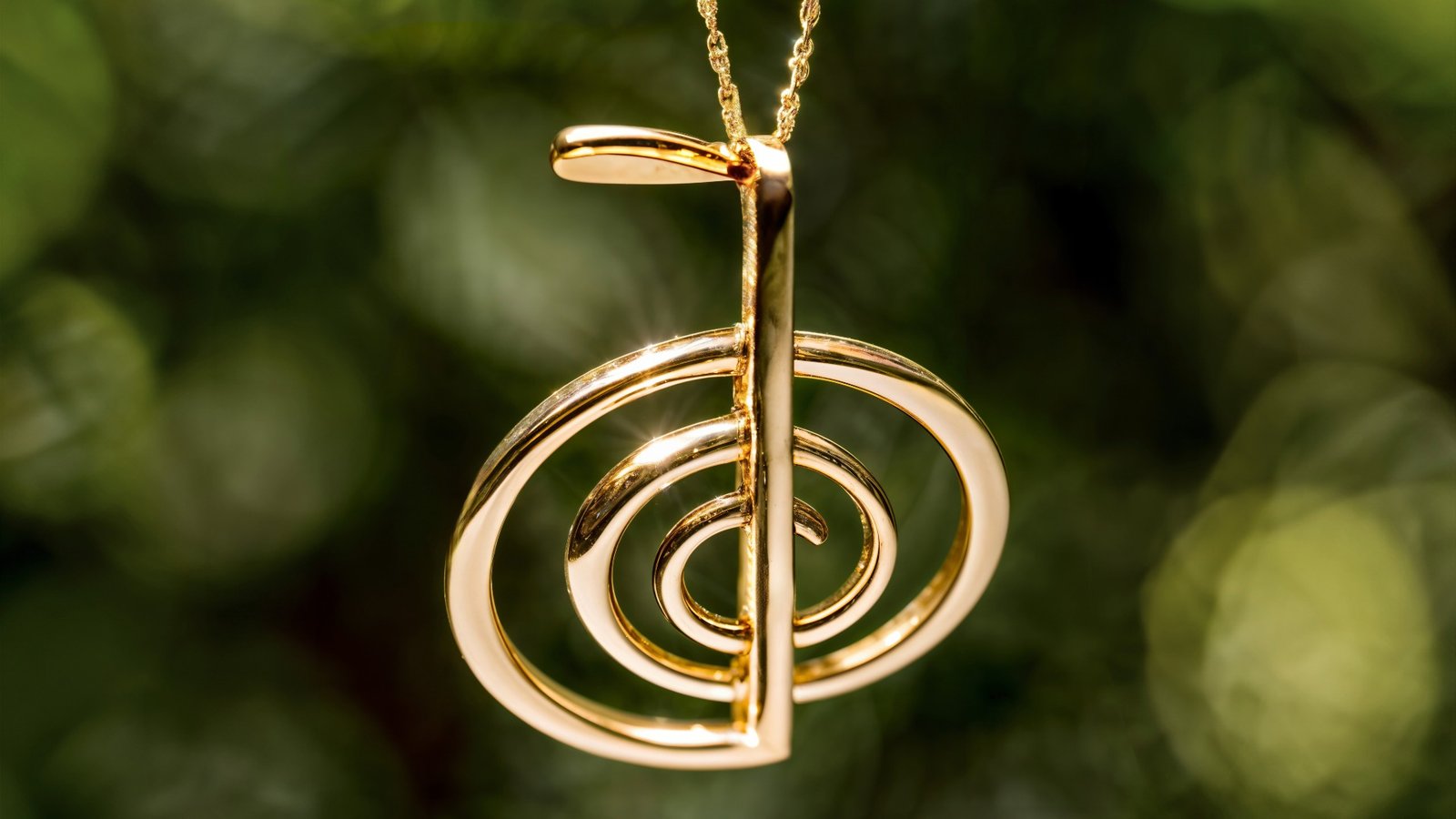
Cho Ku Rei
→ Sei He Ki
→ Cho Ku Rei
→ Hon Sha Ze Sho Nen
→ Cho Ku Rei
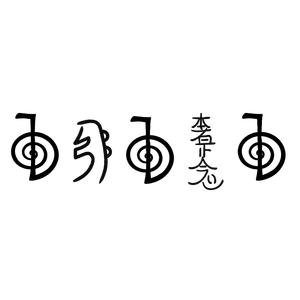
Draw each symbol over the previous one while silently repeating its name three times.
Within the approach taught here, Cho Ku Rei repeatedly focuses and strengthens the practice while supporting the symbols that follow.
Other Reiki lineages may teach different sequences or ways of invoking the symbols.
As a student, begin with the method you have been taught.
With experience, your relationship with the symbols may become increasingly natural and personal.
Bringing Symbols Into Self-Reiki
One of the simplest ways to begin Level 2 symbol practice is to incorporate the symbols into a familiar self-Reiki session.
Settle into Gassho.
Invoke the symbols.
Then place your hands in your usual first self-Reiki position.
There is nothing else you need to make happen.
You may notice that the session feels different.
Perhaps the Reiki feels stronger or more concentrated.
Perhaps your attention becomes quieter.
Perhaps emotion rises.
Perhaps you experience warmth, tingling, pulsing, spaciousness, imagery, or deep stillness.
Perhaps the session feels almost exactly as it did before.
Do not chase a particular response.
The purpose is not to produce evidence that Level 2 is “working.”
Practice and observe.
Allow your relationship with the symbols to develop over time.
A Simple Level 2 Self-Reiki Practice
You may begin with this structure:
1. Arrive
Sit or lie comfortably.
Notice your breathing and body.
2. Gassho
Bring the palms together and allow your attention to settle.
3. Set an Intention
Keep it simple.
For example:
May I receive Reiki according to what is most supportive for me in this moment.
4. Invoke the Symbols
Use the sequence you are practicing.
Silently repeat each symbol’s name three times as you draw it.
5. Begin Self-Reiki
Place your hands in your usual positions.
Remain wherever you feel comfortable.
You may follow a structured sequence or allow your hands to become more intuitive.
6. Release Expectations
If you notice yourself waiting for something dramatic to happen, return to your breath.
Let Reiki be Reiki.
7. Close
Bring your hands together in Gassho.
Pause.
Acknowledge the completion of the practice.
Then return gently to the rest of your day.
Cho Ku Rei and Focused Self-Reiki

As the Power Symbol, Cho Ku Rei is traditionally associated with focusing or strengthening Reiki.
In personal practice, it can become a simple way of marking:
I am entering Reiki now.
You may invoke Cho Ku Rei before beginning self-Reiki or as part of a larger symbol sequence.
You may also find yourself particularly drawn to it on days when your attention feels scattered or your practice feels difficult to settle into.
Draw Cho Ku Rei.
Silently repeat its name three times.
Pause.
Then place your hands.
Instead of trying to mentally increase the Reiki yourself, allow the symbol to remind you:
I do not have to generate Reiki through effort.
Become receptive.
Sei He Ki and the Inner Landscape
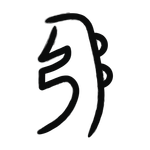
Sei He Ki, traditionally associated with mental and emotional dimensions of Reiki practice, can be especially meaningful in self-Reiki.
Human beings do not arrive at spiritual practice free from emotion.
We bring worry.
Joy.
Grief.
Anger.
Longing.
Frustration.
Excitement.
Confusion.
Memories.
Patterns of thought.
Sometimes we bring several of these at once.
Level 2 does not ask you to purify yourself of ordinary human emotion.
Instead, Sei He Ki can help create a Reiki practice in which those experiences are allowed to be present.
Reiki With an Emotion
Suppose something has upset you.
Rather than immediately trying to analyze the emotion or make it disappear, sit with yourself.
Bring your hands into Gassho.
Notice:
Anger is here.
Or:
Sadness is here.
Or simply:
Something feels difficult today.
You do not need a perfect label.
Invoke Cho Ku Rei according to your practice.
Then draw Sei He Ki while silently repeating:
Sei He Ki.
Sei He Ki.
Sei He Ki.
You may follow it with Cho Ku Rei again.
Then place your hands somewhere comfortable.
Perhaps over your heart.
Perhaps over your abdomen.
Perhaps wherever you naturally feel drawn.
And receive Reiki.
You do not have to tell Reiki what to do with the emotion.
You do not need to demand:
Take this away.
Instead:
This is what is present. I allow Reiki to support what is needed.
Then remain.
Allowing Rather Than Suppressing
There is an important difference between emotional self-care and emotional suppression.
If you use Reiki every time an uncomfortable emotion appears with the goal of immediately eliminating it, spiritual practice can become another way of avoiding yourself.
Instead, Reiki can create room to meet what is already here.
Anger may soften.
Or it may reveal a boundary that needs attention.
Sadness may ease.
Or you may simply allow yourself to grieve.
An anxious mind may become quieter.
Or you may recognize that something practical needs to change.
The Reiki session does not have to produce one predetermined emotional state.
Healing does not always mean feeling pleasant immediately.
Sometimes healing begins with becoming willing to be present with yourself.
Sei He Ki and Habitual Patterns
Sei He Ki is also traditionally used in Reiki practice involving habits and patterns.
Again, this should not be understood as a magical command that removes a habit.
Suppose you notice a recurring pattern:
procrastination,
self-criticism,
reactivity,
difficulty resting,
or repeatedly abandoning a supportive practice.
You might bring the pattern into awareness during self-Reiki.
Not:
Reiki must make me stop doing this.
But:
May Reiki support greater awareness and balance in my relationship with this pattern.
Then practice.
You may notice thoughts or emotions connected with the habit.
You may recognize circumstances that tend to trigger it.
You may simply become more aware of the moment in which the habitual response begins.
Reiki can accompany change.
It does not replace the practical actions change may require.
Reiki and the Five Principles
The Level 2 symbols can also deepen your relationship with the Five Reiki Principles.
You might choose one principle:
Just for today, do not anger.
Just for today, do not worry.
Just for today, be grateful.
Just for today, work honestly.
Just for today, be kind to every living thing.
Bring your hands into Gassho.
Invoke the symbols according to your practice.
Then repeat the principle slowly.
Do not treat it as a command you must obey perfectly.
Let it become a contemplation.
For example:
Just for today, do not worry.
Where is worry present in me?
What am I trying to control?
What might happen if, for this moment, I loosened my grip?
Then allow Reiki.
The Principles do not need to remain words you recite.
They can become places you enter.
Gassho With the Level 2 Symbols
The symbols do not always need to lead immediately into a full self-Reiki session.
You may simply sit in Gassho with them.
Begin with your usual Gassho practice.
When the mind has settled somewhat, invoke the symbols.
Then return your attention to the meeting of the middle fingers.
Do nothing else.
Notice whether the quality of meditation changes.
You may experience stillness.
Energy.
Warmth.
Expansion.
Emotion.
Or nothing particularly noticeable.
Remain receptive without trying to manufacture an experience.
Sometimes the deepest practice is very quiet.
Meditating With a Symbol
You may also choose a symbol as the focus of meditation.
Begin with Gassho.
Invoke Cho Ku Rei first according to the practice taught in this manual.
Then bring the symbol you wish to explore into awareness.
If working with Sei He Ki, for example, draw it and silently repeat its name three times.
Then allow the symbol to remain gently in your awareness.
You do not need to stare mentally at a perfect image.
Simply remain with its presence.
Notice your breath.
Notice your body.
Notice thoughts appearing and disappearing.
If attention wanders, return.
The symbol becomes an anchor.
Over time, meditation may allow you to experience the symbol in a way that cannot be learned simply by reading its description.
Hon Sha Ze Sho Nen in Personal Practice
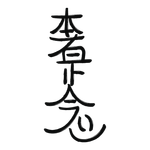
Because Hon Sha Ze Sho Nen is known primarily as the Distance Symbol, it may seem at first that it belongs only to Reiki offered to other people.
Its possibilities are broader.
Within many Reiki traditions, Hon Sha Ze Sho Nen is associated not only with physical distance but with connection beyond ordinary limitations of time.
This opens several possibilities for personal practice.
You might use it while reflecting upon:
- your relationship with a past experience;
- an earlier version of yourself;
- an upcoming event;
- a future intention;
- or the continuity of your own life across time.
These practices should be approached gently.
They are not methods for literally rewriting history or guaranteeing the future.
They are ways of bringing Reiki into your present relationship with past and future.
Reiki for Your Past Self
There may be moments in your past that you remember with tenderness.
Others may carry regret, embarrassment, grief, loneliness, or pain.
You cannot make the past unhappen.
But you can meet the person you were with greater compassion now.
Begin your Reiki practice.
Invoke the symbols according to your Level 2 method.
Bring Hon Sha Ze Sho Nen into the practice.
Then allow a younger or earlier version of yourself to come gently to mind.
You might hold an intention such as:
May Reiki support healing and compassion in my relationship with this part of my life.
Then offer Reiki.
Do not force yourself to relive distressing experiences.
You do not need to recover memories.
You do not need to search for hidden trauma.
You do not need to create an emotional breakthrough.
Simply allow Reiki to accompany the memory as it exists for you now.
If working with the past brings significant psychological distress, qualified mental health support may be more appropriate than trying to process the experience through Reiki alone.
Reiki for Your Future Self
Hon Sha Ze Sho Nen may also be incorporated into practice involving your future.
Perhaps you have an important day approaching.
An examination.
A journey.
A conversation.
A new beginning.
A difficult decision.
You might establish the future situation within your Reiki practice and offer Reiki toward it.
But notice your intention.
Instead of:
Make this happen exactly the way I want,
you might practice with:
May Reiki support me in meeting this experience with clarity, steadiness, and openness.
You are not attempting to command the future.
You are creating a spiritual relationship with how you hope to meet it.
Past, Present, and Future
Working with Hon Sha Ze Sho Nen can also become a meditation on time itself.
The person you were ten years ago no longer exists exactly as they did then.
And yet that person is inseparable from who you are now.
The person you will be ten years from now does not yet exist in the way you exist today.
And yet choices made today are already participating in that future.
Where, then, does the self begin and end?
Is the self only this instant?
Or is it also memory, possibility, relationship, and continuity?
Within Reiki’s spiritual framework, Hon Sha Ze Sho Nen invites us to loosen our ordinary assumptions about separation—not only across space, but across time.
You do not need an intellectual answer.
Practice within the question.
Reiki and Intention Setting
Level 2 symbols can also be used to support personal intentions. This is different from treating Reiki as a manifestation technique that guarantees whatever you request. Reiki does not force a particular result. Instead, it can support the energy surrounding an intention while you remain open to what serves your highest good.
Suppose you want to cultivate a more consistent meditation practice. You might write:
I intend to create space for ten minutes of meditation each morning, in a way that supports my highest good.
You can then offer Reiki to this intention:
- Sit quietly and enter Gassho.
- Place the written intention in front of you or hold it between your palms.
- Bring your attention to the intention without trying to control exactly how it will unfold.
- Draw the Level 2 symbols over the written intention in the following order:
- Cho Ku Rei
- Sei He Ki
- Cho Ku Rei
- Hon Sha Ze Sho Nen
- Cho Ku Rei
- Repeat the name of each symbol as you draw it, following the method taught in this manual.
- Place your hands over the written intention, or hold the paper gently between your palms.
- Allow Reiki to flow for several minutes. There is no need to force a sensation, visualize a particular result, or direct Reiki through personal will.
- When the practice feels complete, release the intention with gratitude. Trust Reiki to support it in the way that serves your highest good.
In this sequence, Cho Ku Rei activates and strengthens the work of the other symbols. Sei He Ki supports the mental and emotional patterns connected with the intention. Hon Sha Ze Sho Nen allows Reiki to reach beyond the immediate moment and accompany the intention as it unfolds. The repeated use of Cho Ku Rei activates and reinforces the sequence.
After offering Reiki, take practical action. Choose a time for your meditation, prepare a comfortable space, set a reminder if helpful, and begin.
Reiki can support the energy surrounding an intention, but it does not replace your participation in your own life. It cannot override another person’s free will or guarantee one predetermined outcome. Intention, Reiki, and practical action can work together while leaving room for the result that serves the highest good.
Reiki Journaling With the Symbols
Your Reiki journal can become especially useful at Level 2.
Before practicing, you might write:
What is present in me today?
Then practice with the symbols.
Afterward, write:
What do I notice now?
You might also record:
- which symbols you used;
- the sequence;
- your intention;
- physical sensations;
- emotional changes;
- images or memories;
- moments of stillness;
- questions that arose;
- and anything that surprised you.
Try to record experience before interpretation.
For example:
I felt warmth in my chest and remembered a conversation from last week.
is an observation.
Whereas:
Reiki showed me that the conversation caused a heart-chakra blockage.
is an interpretation.
The first preserves the experience.
The second adds a conclusion that may or may not be warranted.
Your journal can teach you to recognize the difference.
Let the Symbols Become Familiar
At first, symbol practice may feel deliberate.
You remember the sequence.
You concentrate on the lines.
You silently repeat the name three times.
You wonder whether you drew it correctly.
This is natural.
You are learning a new language within Reiki.
With repetition, something may begin to change.
Your hand remembers.
The name arises naturally.
The symbol appears in awareness without effort.
The transition into Reiki becomes quicker.
What was once a technique begins to become familiar.
This is why practice matters more than memorization.
From Symbol to Presence
Eventually, you may discover that the symbol and the quality of Reiki associated with it feel increasingly close together.
You think of Cho Ku Rei and immediately become focused.
You invoke Sei He Ki and recognize a familiar inner quality.
You bring Hon Sha Ze Sho Nen into awareness and enter the sense of connection associated with distance practice.
Perhaps you still draw every symbol carefully.
Perhaps you begin invoking them more intuitively.
Perhaps at times you simply enter Reiki without consciously depending upon them.
Or perhaps the symbols become an increasingly beloved and solid part of your daily practice.
There is no need to prescribe how this relationship must evolve.
Different practitioners develop different relationships with their tools.
Confidence does not require abandoning the symbols.
Nor does spiritual depth depend upon using them constantly.
Let practice teach you.
Do Not Turn the Symbols Into a Formula
As you become familiar with Level 2, be careful of turning Reiki into an equation.
If I use this symbol three times, then this must happen.
If I use all three symbols, the Reiki must be stronger.
If I draw the sequence perfectly, I will get the result I want.
The symbols can be powerful within Reiki practice without functioning mechanically.
Reiki remains relationship.
The symbol supports the relationship.
The ritual creates a doorway.
But you cannot force mystery into a formula.
Sometimes a carefully structured practice will feel profound.
Sometimes a single moment of Gassho will feel profound.
Sometimes neither will feel particularly remarkable.
Continue anyway.
When Nothing Seems to Happen
There will likely be Reiki sessions in which nothing dramatic happens.
You draw the symbols.
You practice.
And afterward you think:
Was that it?
This is an important moment.
Can you practice without needing Reiki to entertain you?
Can you remain present without demanding a sensation?
Can you trust the practice without inventing an experience?
Not every meditation produces insight.
Not every self-Reiki session produces emotion.
Not every symbol invocation produces tingling or warmth.
Quiet practice is still practice.
When Something Powerful Happens
The opposite may also occur.
You may have a self-Reiki session that feels unusually powerful.
You may experience intense warmth.
A strong sense of energy.
Unexpected emotion.
Vivid imagery.
A feeling of spaciousness.
A profound stillness.
Or a sense of connection that is difficult to put into words.
You do not need to dismiss such experiences.
Receive them.
Honor them.
Let yourself wonder.
But you also do not need to immediately explain them.
A meaningful experience can remain meaningful without becoming a universal claim.
Sometimes:
I don’t know exactly what happened, but the experience mattered to me
is a complete and mature response.
Mystery can remain mystery.
Personal Practice and the Clear Conduit
The idea of becoming a clear conduit for Reiki is not only relevant when you work with other people.
It begins with yourself.
Even during self-Reiki, you may have strong expectations.
I need Reiki to calm me.
I need this feeling to disappear.
I need an answer.
I need to feel energy.
Notice the demand.
Then soften it.
You can still have an intention.
But allow the intention to become spacious.
Instead of:
Reiki must give me this,
try:
I open myself to Reiki and allow Reiki to do what is needed for my highest good.
Then receive.
Being a conduit includes learning how to receive without controlling.
A Deeper Meaning of Self-Healing
Moon Petal Healing places self-practice at the centre of the Reiki path.
But self-healing does not mean that you must constantly search yourself for things that are wrong.
You are not a never-ending repair project.
Sometimes self-healing means resting.
Sometimes it means listening.
Sometimes it means changing a habit.
Sometimes it means accepting something you cannot change.
Sometimes it means asking for help.
Sometimes it means reconnecting with joy.
Sometimes it means sitting quietly with your hands on your body and remembering that you are alive.
Reiki can accompany all of these.
The symbols do not need to turn self-healing into more work.
They can deepen your capacity to meet yourself.
Reiki as a Practice of Oneness
Self-Reiki also contains a beautiful paradox.
Who is giving Reiki?
Who is receiving Reiki?
At the practical level, both are you.
Yet within Reiki’s spiritual framework, Reiki itself is not understood as something created by your individual ego.
You become both practitioner and recipient.
The distinction between giving and receiving begins to soften.
With the Level 2 symbols, this contemplation can deepen further.
Cho Ku Rei brings Reiki into focus.
Sei He Ki invites you into relationship with the inner landscape.
Hon Sha Ze Sho Nen challenges ordinary ideas of separation across space and time.
And beneath all three is a larger question:
What if healing is not simply one separate individual sending something to another separate individual?
What if Reiki practice also invites us to experience ourselves as participants within a larger field of life?
The breath entering you was outside you moments ago.
The elements in your body belong to the Earth.
The atoms of that Earth belong to a much older cosmos.
The boundary of the isolated self begins to become less absolute.
You remain yourself.
Your boundaries still matter.
Your choices still matter.
And yet you are not separate from existence.
Reiki can become a quiet way of exploring this apparent paradox:
individuality within oneness.
Create a Level 2 Personal Practice
As you continue through this manual, consider establishing a simple personal Level 2 practice.
It does not need to be long.
For example:
A Short Practice
Gassho
→ Cho Ku Rei
→ Self-Reiki
→ Gassho
Or:
A Mental and Emotional Practice
Gassho
→ Cho Ku Rei
→ Sei He Ki
→ Cho Ku Rei
→ Self-Reiki
→ Reflection
Or:
A Full Level 2 Symbol Practice
Gassho
→ Cho Ku Rei
→ Sei He Ki
→ Cho Ku Rei
→ Hon Sha Ze Sho Nen
→ Cho Ku Rei
→ Self-Reiki
→ Gassho
Remember to silently invoke each symbol’s name three times while drawing it.
You might practice for ten minutes.
Twenty minutes.
Longer when you wish.
Shorter when life is busy.
Consistency matters more than creating the perfect ritual.
A Seven-Day Personal Symbol Practice
Before moving deeply into distance Reiki, you may spend seven days integrating the Level 2 symbols into your own practice.
Day 1 — Return to Level 1
Practice ordinary self-Reiki without symbols.
Remember your foundation.
Day 2 — Cho Ku Rei
Bring the Power Symbol into your self-Reiki practice.
Notice how the practice feels.
Day 3 — Sei He Ki
Bring gentle awareness to your mental and emotional landscape.
Do not try to fix it.
Offer Reiki.
Day 4 — The Five Reiki Principles
Choose one Principle.
Invoke the symbols and sit with it in Gassho.
Day 5 — Hon Sha Ze Sho Nen
Explore Reiki in relation to your own continuity across time.
You might gently hold your past self or future self in awareness.
Day 6 — The Full Symbol Sequence
Practice:
Cho Ku Rei
→ Sei He Ki
→ Cho Ku Rei
→ Hon Sha Ze Sho Nen
→ Cho Ku Rei
Then receive self-Reiki.
Day 7 — Let the Practice Choose Its Shape
Do not decide everything in advance.
Begin with Gassho.
Listen.
Use the symbols in the way you have been practicing, or return to simple self-Reiki.
Notice what feels natural.
Afterward, reflect on the week.
Reflection
Before continuing, consider:
- How has Level 2 changed my experience of self-Reiki?
- Which symbol do I feel most drawn to?
- How does Cho Ku Rei affect the way I enter practice?
- What happens when I use Sei He Ki while allowing an emotion to remain present?
- Can I offer Reiki to myself without demanding that I feel better immediately?
- What does Hon Sha Ze Sho Nen invite me to contemplate about my relationship with the past and future?
- Do I notice a difference between intention and attachment?
- Am I recording my experiences before interpreting them?
- What happens when I use the full symbol sequence?
- Am I becoming more comfortable with the symbols?
- Do I feel drawn to use them more, less, or differently?
- Can I allow that relationship to evolve?
- What does it mean to receive Reiki while also being its conduit?
- How does self-Reiki change when I contemplate myself as both an individual and part of a greater whole?
- Can I allow some experiences to remain mysterious?
There are no required experiences.
There is only the invitation to practice.
Before You Reach Across Distance
Distance Reiki can be fascinating precisely because it seems to challenge the most familiar structure of Reiki practice:
the practitioner and recipient no longer need to share the same physical space.
But Level 2 is not primarily about acquiring the ability to reach farther.
It is about deepening your relationship with Reiki.
Before reaching across a city, a country, or an ocean, become familiar with the symbols in your own hands.
Before wondering what another person might experience, notice your own expectations.
Before sending Reiki outward, learn how to receive.
The outward practice will be stronger in its foundation when the inward practice is already alive.
Looking Ahead
You have now begun integrating the Level 2 symbols into your personal Reiki practice.
You have used them with self-Reiki.
With Gassho.
With the Five Reiki Principles.
With emotions and intentions.
With reflection on past and future.
And perhaps simply with silence.
Now we are ready to explore one of the defining practices of Reiki Level 2:
distance Reiki.
In the next chapter, Distance Reiki Foundations, we will explore what distance Reiki means within the Reiki tradition, the role of Hon Sha Ze Sho Nen, how consent works when the recipient is not physically present, the relationship between intention and connection, and the mystery of offering Reiki beyond ordinary spatial boundaries.
You do not need to understand exactly how distance Reiki could work before you begin exploring the practice.
You do need to enter it with humility.
With consent.
With discernment.
And with the same principle that has followed you from Level 1:
You are the conduit.
Reiki is not limited by your personal power.
Offer the practice—and release the need to control where it leads.