

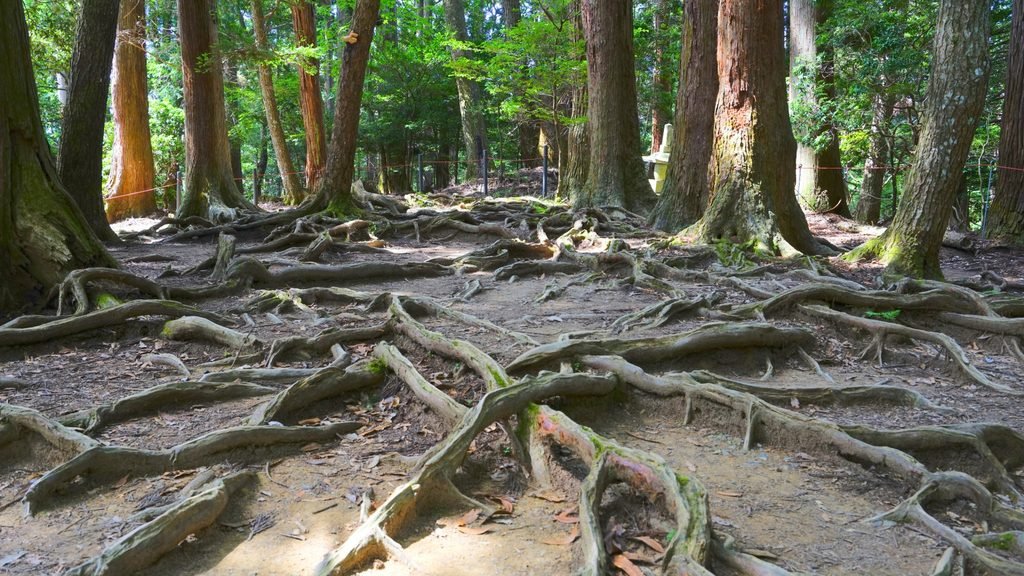
Reiki Level 1
Chapter 3 — The Roots and Spirit of Usui Reiki
Following the Living Thread of Reiki
Every practice carries a story.
When you place your hands for Reiki, you enter a stream of practice that has travelled through teachers, students, countries, and generations. Its forms have continued to grow, yet its heart remains simple: to receive Reiki, to offer healing, and to bring its spirit into daily life.
The Reiki taught in this manual is rooted in Usui Reiki Ryōhō, the healing system associated with Mikao Usui in early twentieth-century Japan.
Returning to these roots allows us to meet Reiki not only as a technique, but as a living path for the healing of body, mind, and spirit.
Mikao Usui and the Beginning of Usui Reiki
Mikao Usui, known to Reiki practitioners as Usui Sensei, was born in Japan in 1865.
Throughout his life, he explored spiritual teachings, philosophy, meditation, and healing. His search eventually led him to Mount Kurama, a sacred mountain north of Kyoto.
According to the account preserved on his memorial stone, Usui undertook a period of fasting and spiritual discipline on the mountain. On the twenty-first day, he experienced a profound awakening and received the ability to offer Reiki healing.
Usui first practised Reiki with himself and members of his family. Recognizing its value, he chose to share it more widely.
In 1922, he established a centre in Tokyo where people could receive Reiki treatments and learn the practice. They came seeking healing from illness, injury, emotional suffering, and other difficulties.
After the Great Kantō Earthquake of 1923, Usui offered Reiki to those who were injured and suffering. As knowledge of his work spread, he travelled throughout Japan to teach and give treatments.
For Usui, healing the body and cultivating the inner life belonged to the same practice. Reiki could relieve suffering, restore harmony, and guide a person toward a more peaceful and compassionate way of living.
The Reiki Lineage
Usui taught many students during his lifetime. Among them was Chujiro Hayashi, who later established a Reiki clinic and continued developing methods for offering Reiki treatments.
Hayashi taught Hawayo Takata, a Japanese American woman from Hawaii. Takata brought Reiki to Hawaii and later shared it throughout the West.
The lineage through which most Western Reiki developed is commonly expressed as:
Mikao Usui → Chujiro Hayashi → Hawayo Takata
From these teachers, Reiki travelled into many countries and communities.
Each generation carried the practice forward. Some teachers preserved particular methods; others adapted the way Reiki was taught. Hand positions, terminology, attunement methods, and course structures gradually took different forms.
Beneath these variations flows the same living thread: Reiki received, Reiki practised, and Reiki passed from one person to another.
The Meaning of Reiki
The word Reiki is commonly understood through two Japanese terms:
- Rei — spiritual, sacred, universal, or guided
- Ki — vital or life-force energy
Together, they are often translated as universal spiritual life-force energy.
Reiki does not originate in the practitioner’s personal energy. The practitioner becomes a conduit through which Reiki flows.
This is why Reiki practice can remain gentle. There is nothing to manufacture and nothing to force. The hands rest, Reiki flows, and the body, mind, and spirit receive according to what is needed.
Reiki goes where it is needed for the recipient’s highest good.
During self-Reiki, you may feel warmth, movement, quietness, emotion, or deep rest. At other times, the experience may be subtle. Reiki continues to work beneath the need for explanation.
When Reiki is offered to another person, the same energy passes through the practitioner. The giver also receives. Within the flow of Reiki, healing is not taken from one person and transferred to another. Both rest within the same greater current.
Over time, this may awaken a quieter understanding of connection. The familiar boundaries between self and life, giver and receiver, inner and outer may begin to soften.
Reiki returns us gently to the whole.
The Five Reiki Principles

At the heart of Usui Reiki Ryōhō are the Five Reiki Principles, also known as the Gokai.
They are traditionally recited in Gassho in the morning and evening:
Just for today, I will not be angry.
Just for today, I will not worry.
Just for today, I will be grateful.
Just for today, I will do my work honestly.
Just for today, I will be kind to every living thing.
Translations differ slightly among Reiki lineages, while the spirit of the teaching remains unchanged.
In the text traditionally associated with the Principles, Usui described this practice as:
The secret art of inviting happiness, the miraculous medicine for all diseases.
The Principles bring Reiki beyond the treatment space and into ordinary life. They meet us in conversation, work, relationships, difficulty, and rest.
Just for Today
The opening words gather the practice into a single day.
Yesterday has passed. Tomorrow has not yet arrived. Today offers enough space for one sincere beginning.
The Principles do not ask for a lifetime of perfection. They invite us to meet this day with awareness—and to begin again with the next.
I Will Not Be Angry
Anger often appears where something feels painful, threatened, or deeply important.
When it is met with awareness, its energy can settle before becoming action. A moment of space opens, and within that space a different response becomes possible.
I Will Not Worry

Worry carries the mind into what has not yet happened.
The breath brings us home. Reiki flows in the present. Here, we can take the action that is available and allow the rest to unfold in its own time.
I Will Be Grateful
Gratitude turns the heart toward what is already here.
It may be found in sunlight across a room, a cup of tea, a caring presence, a moment of quiet, or the simple ability to place the hands and receive Reiki.
These small recognitions soften the day.
I Will Do My Work Honestly
Honest work carries sincerity into whatever has been placed in our care.
Some work is visible and celebrated. Some is quiet and known only to ourselves. Both can be approached with steadiness, integrity, and presence.
Reiki practice is part of this work: returning to the hands, the Principles, and the relationship with Reiki.
I Will Be Kind to Every Living Thing
Kindness extends toward people, animals, the natural world, and oneself.
It lives through gentle words, thoughtful actions, respectful boundaries, and the willingness to recognize another being as part of the same living world.
In kindness, the sense of separation becomes a little less firm.
Living the Principles

The Five Reiki Principles are simple enough to remember and deep enough to accompany a lifetime of practice.
Their meaning changes as life changes.
A Principle that once seemed straightforward may reveal something new during illness, conflict, uncertainty, joy, or loss. The words remain the same, but the person meeting them has changed.
There will be days when the Principles come easily and days when they feel far away. Returning is itself the practice.
Just for today.
Then, tomorrow, just for today once more.
Practice: Gassho With the Reiki Principles

Find a quiet place and sit comfortably.
Bring your hands together in Gassho at the heart. Allow your breathing to settle naturally.
Read or recite the Five Reiki Principles slowly.
Let each one rest for a moment before moving to the next:
Just for today, I will not be angry.
Just for today, I will not worry.
Just for today, I will be grateful.
Just for today, I will do my work honestly.
Just for today, I will be kind to every living thing.
Notice whether one Principle remains with you.
Carry it quietly into the day.
The Spirit of Usui Reiki
The roots of Reiki live wherever the practice is sincerely continued.
They live in the hands that rest upon the body.
They live in the stillness of Gassho.
They live in the Principles remembered during an ordinary day.
They live in Reiki offered to someone who is suffering, and in the humility to allow the energy to find its own way.
Techniques give Reiki form. The Principles allow it to enter daily life. Practice gradually brings the two together.
In this way, Reiki becomes more than something we do.
It becomes part of how we live.
Reflection
Before continuing, spend a few quiet moments with these questions:
- Which of the Five Reiki Principles feels closest to my life today?
- What does being part of a Reiki lineage mean to me?
- How might I allow the spirit of Reiki to enter an ordinary part of my day?
Let your answers remain simple. Their meaning may continue to unfold through practice.
Continue Your Reiki Journey

You have now followed the living thread of Reiki from Usui Sensei to the practice you are beginning today.
In the next chapter, you will prepare for Reiki practice through grounding, centering, Gassho Meditation, breath, posture, and the creation of a supportive practice space.
Reiki Level 1 Manual
- Chapter 1 — Welcome to the Reiki Path
- Chapter 2 — Reiki, Self-Care & Responsible Practice
- Chapter 3 — The Roots and Spirit of Usui Reiki
- Chapter 4 — Preparing Yourself for Reiki Practice
- Chapter 5 — Self-Reiki: The Foundation of All Levels
- Chapter 6 — Foundational Reiki Techniques
- Chapter 7 — Chakras & Self-Reiki
- Chapter 8 — Level 1 Attunement
- Chapter 9 — Offering Reiki in Person
- Chapter 10 — Level 1 Practice & Certification
Come as you are.
Learn what calls to you, move at your own rhythm,
and return whenever you need a quieter place to begin again.