

Reiki Level 1
Chapter 6 — Foundational Reiki Techniques
Many Forms, One Practice
Reiki can begin with something as simple as placing your hands upon the body.
Within the Japanese roots of Reiki, there are also practices that cultivate stillness, receptivity, and awareness. Some use the hands, some the breath, and some the quiet guidance that arises during Reiki.
In this chapter, you will explore:
- Gassho — gathering the hands and attention in stillness
- Joshin Kokyu Ho — breathing with Reiki
- Kenyoku Ho — clearing through “dry bathing”
- Hatsurei Ho — bringing several foundational practices together
- Reiji Ho — allowing the hands to be guided
- Byosen Reikan Ho — listening through the hands
The forms may vary among Reiki lineages. What matters is not performing every movement identically, but discovering what each practice opens within you.
None of these techniques is required before Reiki can flow. You may use one, combine several, or simply place your hands and begin.
Gassho — Returning to Stillness
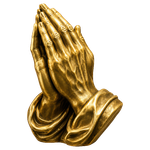
Gassho brings the palms together and allows attention to gather in one place.
Sit comfortably and let the hands meet gently in front of the heart. Relax the shoulders and bring your awareness to the point where the tips of the middle fingers touch.
Thoughts, sounds, and sensations may arise. Whenever attention wanders, return gently to the meeting point of the fingers.
You may remain for a few moments or sit for longer.
The Five Reiki Principles may also be recited in Gassho, allowing their meaning to settle quietly before Reiki practice begins.
Gassho does not ask the mind to become empty. It simply offers somewhere to return.
Joshin Kokyu Ho — Breathing With Reiki
Joshin Kokyu Ho is often translated as a breathing method for cleansing or purifying the mind and spirit.
Sit comfortably with your hands resting upon your thighs or in your lap, palms facing upward. Bring your awareness to the hara—the area of the lower abdomen beneath the navel.
As you inhale, imagine or sense Reiki entering through the crown of the head and flowing toward the hara.
As you exhale, allow Reiki to expand from the hara throughout the body and beyond it.
Inhale—receive.
Exhale—expand.
Continue at a gentle, natural pace. There is no need to deepen the breath, hold it, or create vivid imagery. If visualization does not come naturally, simply remain aware of breathing and the quiet presence of Reiki.
The breath moves.
Reiki moves.
You receive.
Kenyoku Ho — Dry Bathing
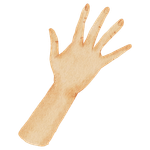
Kenyoku Ho means “dry bathing.” It uses sweeping movements to clear the energy and mark a transition into or out of Reiki practice.
Different Usui Reiki lineages preserve slight variations in the sequence. The form below is commonly practised within the Usui Reiki tradition:
- Bring the right hand toward the left shoulder and sweep diagonally across the chest toward the right hip.
- Bring the left hand toward the right shoulder and sweep toward the left hip.
- Repeat the first movement from the left shoulder toward the right hip.
- Extend the left arm. With the right hand, sweep from the left shoulder along the arm and beyond the fingertips.
- Extend the right arm and repeat the movement with the left hand.
- Sweep along the left arm once more.
The movements may lightly touch the body or pass just above it. Let them be deliberate without becoming forceful.
Pause when the sequence is complete.
Kenyoku may be used before Reiki as a way of arriving, or afterward as a way of releasing the practice and returning to ordinary activity.
Energetic clearing need not arise from fear. It can be as simple as allowing what has passed to pass—and meeting the present moment with clarity.
Hatsurei Ho — Cultivating the Reiki Within
Hatsurei Ho is a traditional practice for cultivating one’s relationship with Reiki. It gathers several foundational techniques into a single rhythm.
The precise form differs among lineages, but a simple sequence may include:
Kihon Shisei — Settling the Body
Sit comfortably with the spine naturally upright and the hands resting upon the thighs.
Let the body soften.
Mokunen — Silent Intention
Turn your attention inward and silently acknowledge that the practice is beginning.
Kenyoku Ho — Dry Bathing
Perform the sweeping movements of Kenyoku, allowing them to clear the transition into practice.
Opening to Reiki
Raise your hands above your head with the palms facing one another.
Become receptive to Reiki without trying to summon or manufacture it.
Joshin Kokyu Ho — Reiki Breathing
Lower the hands to your lap with the palms facing upward. Let the breath carry awareness toward the hara and allow Reiki to expand throughout your whole being.
Gassho
Bring the palms together and rest your attention where the middle fingertips meet.
Seishin Toitsu — Unifying the Mind
Remain quietly gathered. Let the hands, breath, awareness, and Reiki rest within the same movement.
Gokai Sansho — The Reiki Principles
Recite the Five Reiki Principles slowly:
Just for today, I will not be angry.
Just for today, I will not worry.
Just for today, I will be grateful.
Just for today, I will do my work honestly.
Just for today, I will be kind to every living thing.
Mokunen — Closing
Return the hands to your lap. Silently acknowledge that Hatsurei Ho is complete and thank Reiki.
Hatsurei Ho offers a container for practice. In time, its movements may become familiar enough that the body recognizes the way before the mind needs to remember it.
Reiji Ho — Allowing the Hands to Be Guided

Reiji Ho is the practice of becoming receptive to guidance about where the hands may rest during Reiki.
Begin in Gassho.
Offer Reiki for your own highest good or the recipient’s highest good. Release the need to decide what must happen.
Keeping the palms together, bring the hands gently toward the forehead. Silently ask Reiki to guide your hands.
Then wait.
You may feel drawn toward a particular area. A hand position may enter your mind, or your hands may begin moving before you have consciously chosen where they should go. You may simply feel that it is time to remain somewhere longer.
Follow the inclination gently.
If nothing arises, use the familiar hand positions. Silence is not an absence of Reiki, and guidance does not need to appear dramatically.
Reiji Ho is not about finding the correct answer. It is the movement from deciding toward listening.
Byosen Reikan Ho — Listening Through the Hands

Byosen Reikan Ho is a practice of noticing areas that feel different or quietly draw your attention.
Hold the hands over or upon the body and move slowly from one area to another. Remain relaxed and notice what arises in the palms, fingers, body, or awareness.
You may experience:
- Warmth or coolness
- Tingling or pulsing
- Heaviness or lightness
- A subtle sense of pressure
- A change in sensation
- A quiet pull toward an area
- An inclination to pause
You may also feel nothing unusual.
If an area draws your attention, allow the hands to remain there while Reiki flows. Move onward when the sensation changes, your attention shifts, or it simply feels time to continue.
Byosen can be explored during self-Reiki or when offering Reiki to another person.
What you notice belongs to the practice of listening. It does not need to become an explanation or diagnosis. A sensation can remain a sensation:
My hands became warmer here.
I felt drawn to remain here.
Nothing more needs to be added.
Structure and Intuition

Hand positions offer structure. Reiji and Byosen invite listening.
The two approaches do not oppose one another.
You may follow a whole-body sequence and pause when one area draws your attention. You may begin intuitively and later return to familiar positions. On some days, structure will allow the mind to settle. On others, the hands may find their own way.
The practice can move between form and freedom.
Neither requires control.
One Current Beneath Every Technique
Each technique has its own form:
Gassho gathers attention.
Joshin Kokyu Ho opens the breath.
Kenyoku clears the transition.
Hatsurei Ho creates a container for practice.
Reiji Ho listens for guidance.
Byosen Reikan Ho listens through the hands.
Beneath them runs the same current.
Personal effort becomes quieter. The need to direct begins to soften. The practitioner allows Reiki to move according to its own wisdom.
Being a clear conduit does not mean reaching a perfect spiritual state. Thoughts and emotions may still arise. You may become distracted or wonder whether you are practising correctly.
Notice—and return.
Return to the hands.
Return to Gassho.
Return to Reiki.
Clarity is not something you must hold perfectly. It appears whenever personal effort moves aside.
Where Practitioner and Reiki Meet
At first, it may seem that you are performing a technique in order to connect with Reiki.
With time, that separation may become less certain.
The breath is already moving before you direct it. Life is already flowing through the body. Reiki is not produced by the personal self, nor does it wait at a distance for you to summon it.
Gassho, breathing, and movement do not create Reiki. They allow you to notice what is already here.
The technique is performed.
Then the technique becomes quiet.
Only the practice remains.
Finding Your Own Rhythm

You do not need to use every foundational technique in each session.
Your practice might be:
Gassho → Self-Reiki
Or:
Kenyoku → Joshin Kokyu Ho → Gassho → Self-Reiki
You may practise Hatsurei Ho on its own, include Reiji within a whole-body treatment, or explore Byosen whenever you wish to listen more closely through the hands.
On another day, your entire preparation may be:
Hands together.
One quiet moment.
Begin.
There is no hierarchy among these forms. A longer practice is not necessarily deeper, and simplicity does not mean that anything is missing.
Let the techniques support your relationship with Reiki. As trust grows, allow the form to become your own.
Reflection
Spend a few quiet moments with these questions:
- Which foundational technique helps me settle most naturally?
- What changes when I listen instead of trying to direct Reiki?
- Can I allow the form of my practice to become simpler as trust deepens?
There is no need to answer immediately. Let the techniques reveal themselves through practice.
The Form Opens Into Practice
Techniques give the hands, breath, and attention somewhere to begin.
Then something quieter takes over.
The breath moves without being commanded. The hands rest without needing to know everything. Reiki flows without waiting for the personal self to direct its path.
Learn the forms gently.
Return to those that call to you.
And when the form has carried you into stillness, allow it to disappear.
In the next chapter, you will explore the chakra system as another way of understanding the whole being—and how chakra awareness may be woven naturally into self-Reiki.
Continue With Returning to Presence

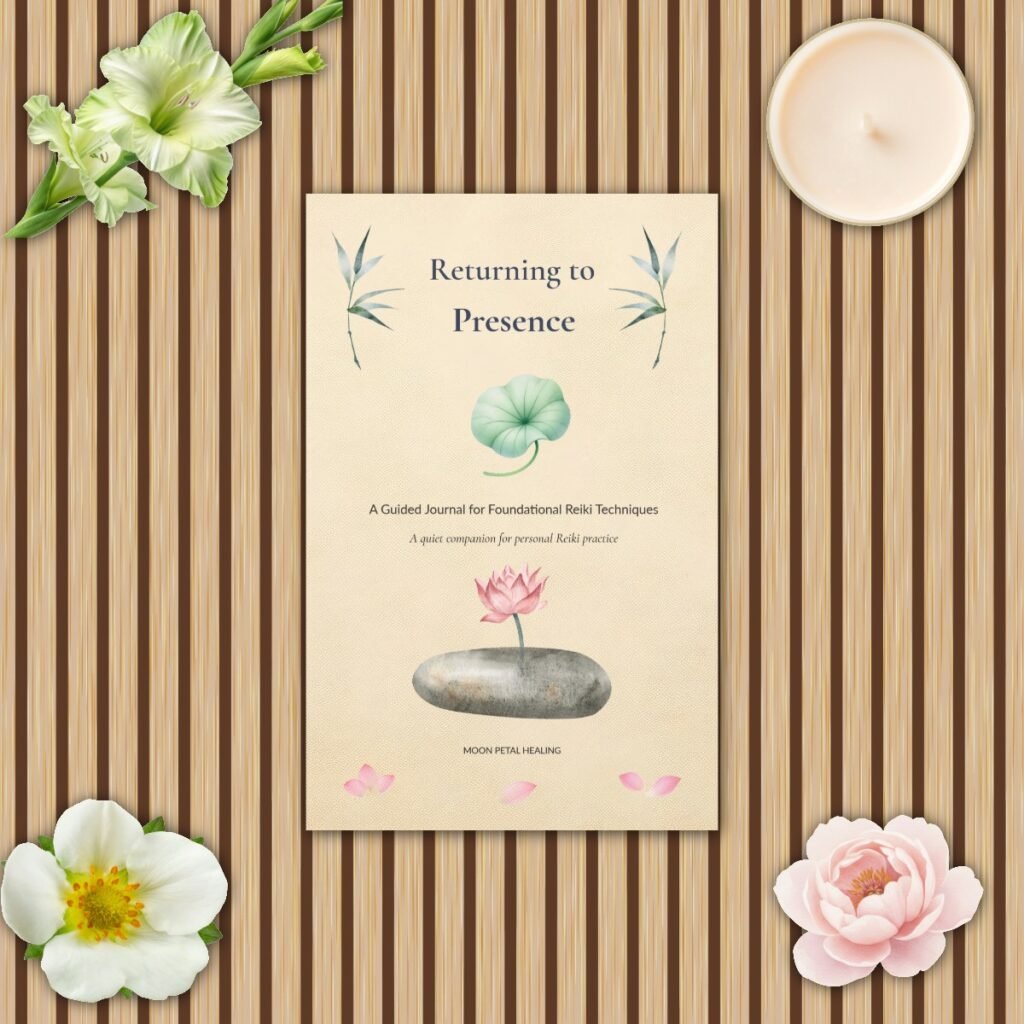
If you would like to explore these foundational techniques beyond the chapter, Returning to Presence offers two gentle companions for continued practice.
The guided journal provides space to practise each technique slowly, record what you notice, and allow your understanding to deepen over time.
The six printable practice cards keep the foundational techniques close at hand. Use one card as the focus of a practice, or place several together to create a sequence that feels natural to you.
Both are invitations to return—not to perfect the techniques, but to let them become lived experience.

Reiki Level 1 Manual
- Chapter 1 — Welcome to the Reiki Path
- Chapter 2 — Reiki, Self-Care & Responsible Practice
- Chapter 3 — The Roots and Spirit of Usui Reiki
- Chapter 4 — Preparing Yourself for Reiki Practice
- Chapter 5 — Self-Reiki: The Foundation of All Levels
- Chapter 6 — Foundational Reiki Techniques
- Chapter 7 — Chakras & Self-Reiki
- Chapter 8 — Level 1 Attunement
- Chapter 9 — Offering Reiki in Person
- Chapter 10 — Level 1 Practice & Certification
Come as you are.
Learn what calls to you, move at your own rhythm,
and return whenever you need a quieter place to begin again.