

Reiki Level 1
Chapter 4 — Preparing Yourself for Reiki Practice
Arriving Before You Begin
Preparation creates a small threshold between the movement of daily life and the quiet of Reiki practice.
You may have come from work, conversation, household tasks, or a mind still moving through the events of the day. A brief pause allows the body to settle and attention to soften.
Preparation can take several minutes, a single moment, or no time at all.
Reiki does not depend upon a particular room, posture, meditation, or opening sequence. When you already feel ready, you may simply place your hands and begin.
With time, even a familiar gesture—the closing of a door, the placing of a cushion, the joining of the hands in Gassho, or simply focusing your mind on Reiki—may become a gentle signal:
Now I begin.
Creating a Place to Practise

Reiki can be practised wherever you feel reasonably comfortable.
This may be a chair beside a window, a corner of your bedroom, a yoga mat, your bed, or a peaceful place outdoors.
You may enjoy practising with a candle, plant, crystal, soft music, or another object that carries meaning for you. You may prefer a simple room with nothing added.
The setting supports the practice without determining it. A quiet environment may help you settle, while Reiki can also be practised in the midst of ordinary life.
As you return to the same place over time, it may begin to hold a familiar sense of stillness.
Comfort and Posture

You may practise Reiki seated, lying down, standing, or supported by cushions.
Let your body find a position it can maintain without strain. Soften the jaw and shoulders, and allow the hands to rest easily.
Notice whether any part of the body would welcome an adjustment.
Perhaps the neck would like a cushion. Perhaps the knees would be more comfortable beneath a blanket. Perhaps lying down would allow the body to receive more fully.
Reiki hand positions can also be adapted. A hand may rest directly upon an area, hover above it, or be placed somewhere nearby.
Comfort allows the hands and body to remain at ease while Reiki flows.
Grounding and Centering
Grounding and centering describe the same gentle movement: returning awareness to the body and the present moment.
Feel the support beneath you. Notice the natural movement of your breathing, the weight of your hands, or the contact between your feet and the floor.
You might silently acknowledge:
I am here.
I am supported.
You may also use another grounding meditation that you prefer.
This pause can be as brief or as long as feels helpful. When you already feel present and grounded, you may shorten it to a single moment or skip it entirely.
Grounding is a supportive practice, not a requirement for Reiki to flow.
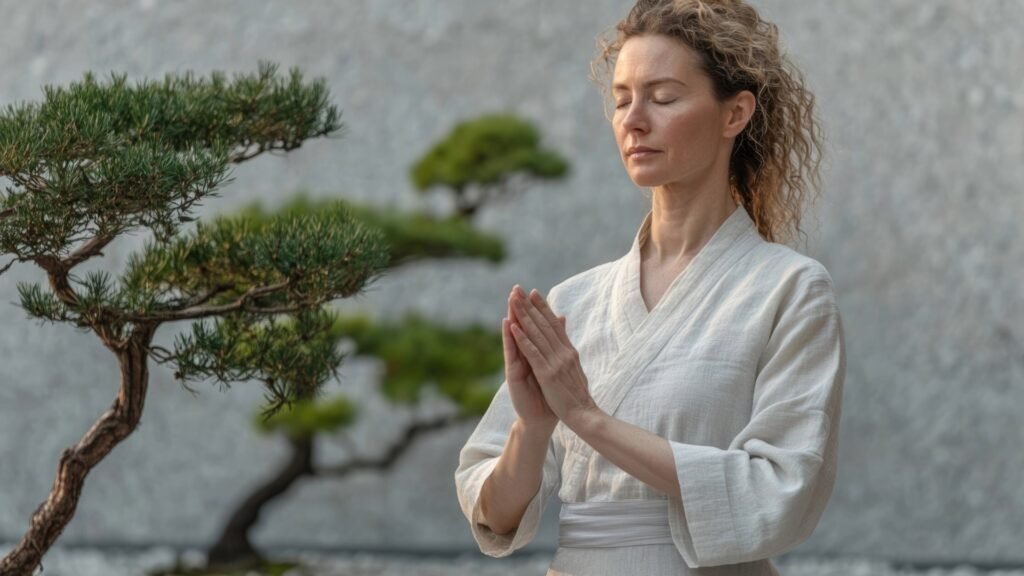
Gassho Meditation
Gassho means bringing the palms together. Within Reiki practice, this simple gesture gathers the hands, attention, and intention into one place.
Sit comfortably and bring your palms together in front of the heart.
Allow the shoulders to relax and the hands to meet without pressure. Close your eyes or lower your gaze.
Bring your awareness to the point where the tips of the two middle fingers touch.
Feel the quiet contact between them.
Breathing continues naturally. Thoughts, sounds, and sensations may arise. Whenever attention wanders, return gently to the meeting point of the fingertips.
Each return is part of Gassho.
You may remain for a few moments or continue for longer when the practice naturally deepens.
The Five Reiki Principles may also be recited in Gassho:
Just for today, I will not be angry.
Just for today, I will not worry.
Just for today, I will be grateful.
Just for today, I will do my work honestly.
Just for today, I will be kind to every living thing.
Let the words settle quietly. One Principle may remain with you and accompany the practice that follows.
Opening to Reiki
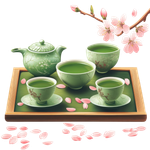
Gassho is a recommended way to begin Reiki practice. Its simplicity creates a natural transition from daily activity into stillness and connection with Reiki.
From Gassho, you may hold a simple intention, such as:
I open to Reiki for my highest good.
or
May Reiki flow where it is needed.
These are only examples. You may use whatever words carry your intention, or allow the intention to arise silently without words. During everyday self-Reiki, this silent turning toward Reiki may feel most natural.
An intention opens the practice without deciding how healing should unfold.
You may then allow the hands to separate and move toward the body.
Reiki begins to flow.
As your practice develops, you may discover a preferred way of beginning. You might continue with Gassho, begin with one of the foundational Reiki techniques you will learn, or later incorporate a Reiki symbol after receiving the appropriate training.
The opening can grow naturally with your practice.
Gassho and intention can offer a beautiful transition into Reiki, while the simplest beginning is equally complete:
Place your hands.
Allow Reiki to flow.
Nothing more is required.
Allowing the Form to Remain Simple
Preparation is there to support Reiki practice, not to stand between you and it.
On some days, you may create a quiet space, sit in Gassho, reflect upon the Reiki Principles, and remain in meditation before beginning.
On other days, your practice may begin the moment your hands come to rest upon your body.
Both belong within Reiki.
The form can change with the moment. What remains is the willingness to receive and the openness to allow Reiki to move according to its own wisdom.
As personal effort quiets, the practitioner becomes a clearer conduit.
The hands rest. Reiki flows. The need to manage the experience begins to fall away.
Within this simplicity lies one of the deeper movements of Reiki practice: less doing, less directing, and less insistence from the personal self.
Closing the Practice

When your Reiki practice feels complete, allow the hands to rest for a moment.
Notice your body, your breathing, and the room around you.
You may bring the palms together in Gassho and offer quiet gratitude—for Reiki, for the time you have given yourself, and/or for whatever has unfolded.
The closing may be as simple as:
Thank you, Reiki.
The words may be spoken or silent. What matters is the gratitude they carry.
Thanking Reiki nurtures humility and reminds us that Reiki does not arise from personal effort. We receive it even as it flows through us.
Gently move your fingers and toes, stretch, drink some water, or return directly to your day.
If you have been lying down, rise slowly.
The formal practice ends, while Reiki may continue to unfold.
A Rhythm of Your Own
Through continued practice, you will discover what feels natural to you.
You may begin every session with Gassho. You may prefer a familiar grounding meditation, another foundational Reiki technique, a Reiki symbol received through later training, or no preparation beyond turning your attention toward Reiki and placing your hands.
Your way of beginning may also change from day to day.
A practice can be sincere without being elaborate. Its depth does not come from the number of steps surrounding it.
Depth grows through returning—through receiving Reiki, allowing it to work, and gradually releasing the need to control what happens.
The outer form becomes simpler.
The relationship becomes deeper.
Reflection

Before moving into self-Reiki, spend a few quiet moments with these questions:
- What position and setting allow my body to receive Reiki comfortably?
- What do I notice when I rest in Gassho for a few moments?
- Can I allow Reiki to flow without directing the outcome?
Let the answers remain open. Practice will continue to deepen them.
Continue Your Reiki Journey

Preparation can be a room made quiet, a moment in Gassho, or simply turning your mind toward Reiki.
It can also be the simple movement of placing your hands upon the body.
There is no distance to travel before Reiki begins.
Reiki is here with you now.
In the next chapter, you will explore self-Reiki—the foundation upon which every level of Reiki practice continues to grow.
Reiki Level 1 Manual
- Chapter 1 — Welcome to the Reiki Path
- Chapter 2 — Reiki, Self-Care & Responsible Practice
- Chapter 3 — The Roots and Spirit of Usui Reiki
- Chapter 4 — Preparing Yourself for Reiki Practice
- Chapter 5 — Self-Reiki: The Foundation of All Levels
- Chapter 6 — Foundational Reiki Techniques
- Chapter 7 — Chakras & Self-Reiki
- Chapter 8 — Level 1 Attunement
- Chapter 9 — Offering Reiki in Person
- Chapter 10 — Level 1 Practice & Certification
Come as you are.
Learn what calls to you, move at your own rhythm,
and return whenever you need a quieter place to begin again.